


TL;DR How to Increase Student Engagement and Stop the Drop-Off
I know you're busy, so here's the gist: Getting students to finish your online course is the real challenge, not just creating it. Many courses fail because they don't address the human element – the fears, the motivation, the need for connection. My goal here is to cut through the noise and give you practical ways to build engagement into the very fabric of your course.
Here are 3 key takeaways if you're skimming:
- Your platform matters, but not for the reasons you think. It’s about creating a seamless, personalized experience that removes friction and makes learning feel easy, not just about features.
- Engagement is psychological, not just technical. Address student fears, foster intrinsic motivation, and use low-stakes activities to encourage participation without the pressure of perfection.
- Break it down and mix it up. Short, varied lessons with multimedia and real-world examples keep attention spans locked in.
If you're tired of seeing your completion rates languish, I encourage you to dive into the full article. You'll find specific strategies that can genuinely transform your online learning environment.
I've seen it happen countless times.
A brilliant mind pours their expertise into an online course or a virtual training program, only for the enthusiasm of the learners to dwindle by week two. Discussion boards fall silent, assignments go unsubmitted, and the completion rates tell a story of good intentions meeting a wall of disengagement. As someone who's consumed my fair share of online learning – and worked with creators and educators across the spectrum – I know this feeling well, both as a learner and as an observer.
The truth is, simply putting content online isn't enough. To truly make an impact, to see learners not just start but thrive and finish, we need to increase student engagement in online learning. This isn't just a nice-to-have; it's the bedrock of effective education and training.
My goal today is to cut through the noise and offer you a clear, actionable roadmap. We'll look at what engagement really means, why it’s so critical, and then dive into strategies that make a tangible difference. These aren't just theoretical concepts; they're approaches I've seen work, refined through experience and a good dose of strategic thinking.
What is Student Engagement, and Why Does it Matter So Much?
Before we talk about how to increase engagement, let's get clear on what we're actually aiming for. "Student engagement" can feel like a buzzword, but at its heart, it's about a learner's active involvement and commitment to the learning process. It’s not just about showing up; it’s about showing up mentally, emotionally, and actively.
I think about engagement across a few key dimensions:
- Cognitive Engagement: This is when learners are truly grappling with the material, thinking critically, solving problems, and making connections. They're not just memorizing; they're understanding and applying. For a university student, this might be synthesizing complex theories. For an employee in a corporate training, it's applying a new software skill to a real-world task.
- Emotional Engagement: This dimension speaks to a learner's feelings about the course. Are they curious? Motivated? Feeling a sense of belonging and support? When learners feel valued and excited, they're far more likely to persist through challenges. A K-12 student who feels a connection to their teacher and classmates will be more resilient.
- Behavioral Engagement: This is the observable participation – attending live sessions, completing assignments, asking questions, contributing to discussions, and interacting with the learning platform. It's the "doing" part of learning.
- Social Engagement: Particularly crucial in online environments, this is about interaction with peers and instructors. Do learners feel part of a community? Are they collaborating, sharing ideas, and learning from each other? This can be a lifeline in preventing the isolation often associated with online learning.
Why does all this matter beyond just completion rates? Because engaged learners achieve deeper learning outcomes. They retain information longer, develop critical thinking skills, and are more likely to apply what they've learned in real-world contexts. They become advocates for your program, your course, or your institution. Ultimately, it’s about creating a transformative learning experience, not just delivering content.
Common Hurdles to Online Engagement (and How to Clear Them)
Here's the thing: online learning comes with its own set of challenges. Ignoring them won't make them disappear. Instead, acknowledging these common hurdles helps us proactively design solutions.
Here are a few I see most often:
- The Isolation Factor: Learning alone at a screen can feel isolating. Without the casual hallway chats or the shared energy of a classroom, motivation can wane.
- The Fix: Build in structured opportunities for social interaction. Think small group activities, peer feedback, or even dedicated "virtual coffee breaks."
- Information Overload & Cognitive Fatigue: Too much text, too many long videos, or a disorganized structure can quickly overwhelm learners, leading to burnout.
- The Fix: Break content into bite-sized chunks, vary your media, and provide clear navigation. Remember, less can often be more when it comes to attention spans.
- Lack of Immediate Feedback: In a traditional classroom, you can read body language or answer a question on the spot. Online, delays in feedback can be demotivating.
- The Fix: Integrate self-assessments, automated quizzes, and clear rubrics. Make a commitment to timely, constructive feedback on submitted work.
- Technological Frustration: A clunky platform, broken links, or confusing interfaces can derail even the most motivated learner.
- The Fix: Choose a reliable, intuitive learning platform. Provide clear tech support resources and simple, step-by-step instructions for any tools you introduce.
- Motivation Drift: Life happens. Work, family, other commitments can easily push online learning to the back burner if the intrinsic motivation isn't strong.
- The Fix: Connect learning to real-world relevance, celebrate small wins, and foster a sense of progress. Personalization, which we'll discuss, is key here.
Understanding these challenges isn't about being pessimistic; it's about being strategic. By anticipating where learners might struggle, you can design your online experience to overcome these obstacles, rather than be defined by them.
10 Practical Ways to Increase Student Engagement in Your Online Learning Environment
Now for the good stuff. These are the strategies I've seen make a genuine difference, applicable whether you're building a professional development course, designing a module for a K-12 class, or crafting a higher education curriculum.
1. Use an Online Course Platform that Prioritizes Learner Engagement
I’ve started countless courses over the years, and the ones I actually finished had one thing in common: the learning environment didn't fight me.
If your students are struggling to navigate, find the next lesson, or figure out where they left off, you’ve already lost the engagement battle. A clunky, confusing, or slow platform adds friction, and friction is the enemy of completion.
You need a tool that guarantees a quality experience while giving you total control over the look, feel, and flow of the learning journey. I believe deeply in owning your platform, which is why I recommend a dedicated WordPress LMS like Thrive Apprentice.
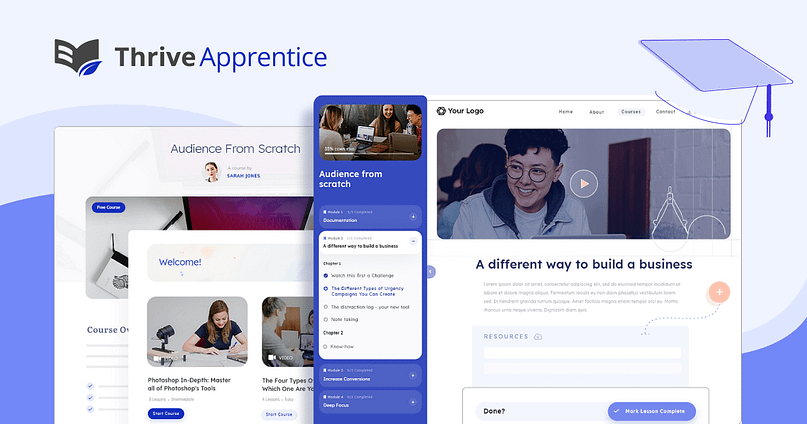
It's an LMS plugin that gives you total control over your course's look and feel, right on your own site. This isn't just about aesthetics; it's about creating a professional, branded experience that feels cohesive and trustworthy.
- Quick Setup: The setup wizard gets you going without needing to be a tech wizard yourself. This is huge when you're eager to get your content out there.
- Your Course, Your Rules: You host everything on your WordPress site. This means you own your data, your brand, and your student relationships. No platform fees eating into your revenue, which is a nice bonus.
- Brand It Like a Pro: Customizable templates mean you can match your course design to your existing brand with a few clicks. This consistent visual identity reinforces professionalism and trust.
- Engage & Delight: Thrive Apprentice includes built-in features like assessments, certificates, and personalized completion pages. These are powerful tools for motivating learners and guiding them to their next steps, whether that's another course or a related resource.
- Stay Organized: Features like drip content, access restrictions, and minimum watch times help you structure the learning journey effectively. This ensures learners consume content in the right order and at the right pace, preventing overwhelm.
Choosing the right foundation is a strategic decision. It sets the tone for the entire learning experience and removes unnecessary friction, letting your content shine.
2. Personalize Your Course Platform
Ever notice how much more you care about something when it feels made just for you? That's the power of personalization.
When people see their name pop up or get lessons that fit their style, they're way more likely to stick with it and actually finish their courses.
So how do you make it happen?
Start with your “Course Overview” page.
When you start using Thrive Apprentice, you already have a “Course Overview” template available in your library, that you can customize anytime.

In your template, you can use the “dynamic text” feature to display your learner’s name, like this:
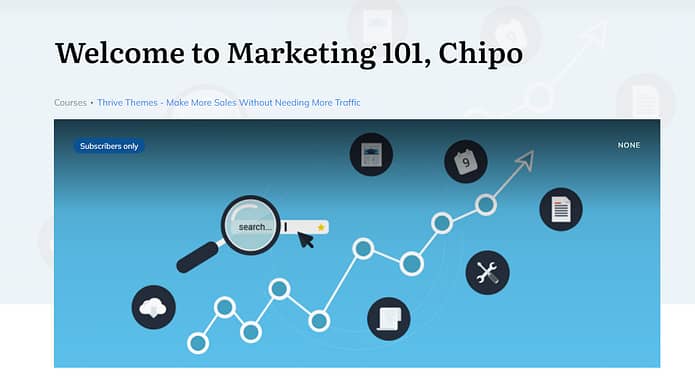
Setting this up is super easy – and can be used on any of your course platform templates. You can use this tutorial to learn how to add dynamic text to your pages.
And this feature helps you add more than just your learners’ names. You can also add course progress indicators, lesson counts, course difficulty levels and so much more.
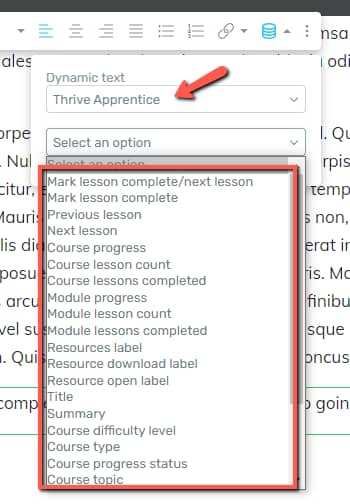
And that’s not all. You also have access to a super neat feature called “Conditional Display”.
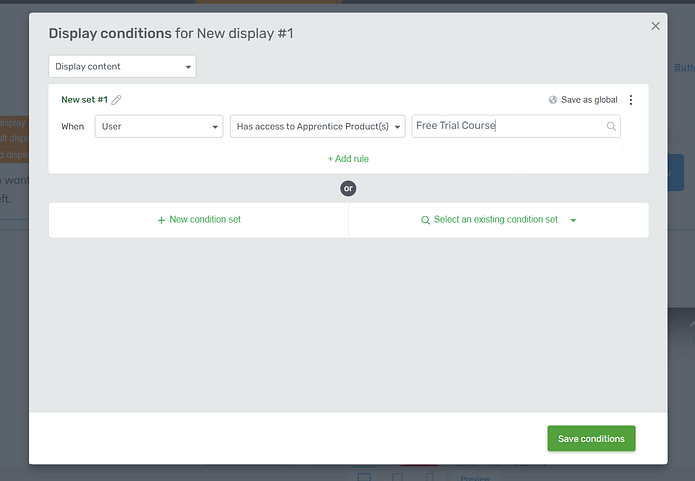
With this tool, you can create different versions of one page for different audiences. For example, you can configure a page for paid learners, who have full access to the course, and a different page for learners who have signed up for a free trial of your online course.
The “Free Trial” homepage can have call to action buttons that encourage free users to buy the whole course and other elements to drive conversions.
And if you’ve purchased Thrive Architect, our page editor, you can take this to a more granular level and customize each individual lesson to offer a fully personalized experience to your learners.
You could add encouraging messages to lessons that come after a quiz, or link to other relevant courses your learners may find interesting.
You can even create a special page just for when they finish a course. Top it off with a certificate with their name on it – who doesn't love seeing their name in print?
When you make your online classroom feel like it's built just for them, you'll keep your learners interested and coming back for more.
3. Break Down Content into Manageable, Bite-Sized Chunks
There's a reason nobody wants to sit through a two-hour lecture online. Our attention spans are shorter, and the cognitive load of processing information from a screen is real. Forcing learners to consume huge blocks of content is a recipe for overwhelm and disengagement.
Instead, think "snackable." Break your lessons into shorter, focused segments. A 10-minute video, a concise reading, or a quick interactive exercise is far more approachable than a marathon session. This aligns with cognitive science principles around working memory capacity – smaller chunks are easier to process and retain.
For a university course, this might mean turning a traditional 50-minute lecture into three 15-minute videos, each followed by a short discussion prompt. For corporate training, it could be breaking down a complex software tutorial into individual feature demonstrations, each with a quick practice exercise.
4. Inject Multimedia Elements Beyond Just Text
Reading a screen for hours is tiring. To keep learners engaged and cater to different learning styles, you need to go beyond just text and static images. Multimedia isn't just about making things "pretty"; it's about making them more effective.

- Strategic Video: Videos are powerful. Use screencasts for software demonstrations, animations to explain abstract concepts, or short "talking head" clips to introduce a topic or offer encouragement. Keep them concise and purposeful.
- Engaging Audio: Don't underestimate audio. Short audio explanations, podcast-style interviews, or even guided meditations can offer a different way to consume content, especially for learners on the go.
- Visuals That Inform: Infographics, charts, diagrams, and visual summaries can communicate complex data far more effectively than dense paragraphs. They help visual learners process information and break up the text-heavy nature of many online courses.
- Interactive Elements: Beyond just viewing, think about elements that require interaction. Clickable diagrams, drag-and-drop exercises, or embedded simulations can transform passive viewing into active participation.
For a K-12 science class, this could mean embedding a virtual lab simulation. For a marketing course, it might be an interactive case study where learners make decisions at different stages. The key is variety and purpose – each media type should serve a specific learning goal.
5. Ground Concepts in Real-World Problems and Examples
One of the quickest ways to lose a learner is to make the content feel abstract and irrelevant. When you connect what's being taught to real-life situations, challenges, or applications, learning becomes immediately more meaningful and engaging. This taps into the principle of constructivism – learners build knowledge by connecting new information to their existing understanding of the world.
Whether it's a university engineering course using real-world design challenges or a corporate leadership program analyzing actual team dynamics, bringing the "real" into the virtual classroom makes a profound difference.
6. Implement Minimum Watch Times for Video Lessons
This might sound a little prescriptive, but hear me out. We've all been there: clicking through a video, just trying to get to the next section. While I believe in learner autonomy, sometimes a gentle nudge ensures they're actually absorbing the core content.
Setting a minimum watch time for video lessons means a learner needs to watch a certain percentage (say, 80-90%) of the video before it's marked complete. This isn't about tricking anyone; it's about ensuring they're exposed to the crucial information before moving on. It's a behavioral prompt that supports cognitive engagement.
With Thrive Apprentice, this is a straightforward feature to set up. You can even customize the required time for each individual lesson, giving you flexibility based on the video's importance or complexity. It's a simple, yet effective, way to encourage thoroughness without being overly restrictive.
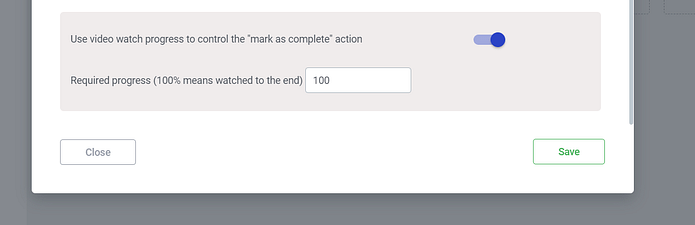
If you’re using Thrive Apprentice to create your online courses, you can add a minimum watch video time to your video lessons in a couple of minutes – use this guide to learn how.
7. Use Assessments to Deepen Learning, Not Just Test It
Assessments often get a bad rap, seen as mere hurdles or judgment points. But when designed thoughtfully, they are incredibly powerful tools for engagement. They don't just test knowledge; they drive learning, provide crucial feedback, and signal to learners what's truly important.
Drive Engagement with Thrive Apprentice's Assessments
Thrive Apprentice gives you all the tools you need to create engaging assessments that keep your learners hooked to your course.
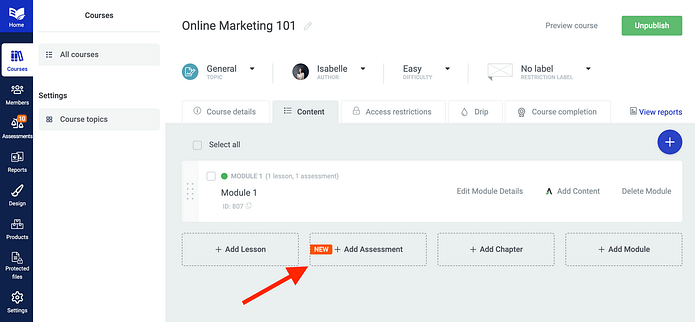
An assessment sits amongst your course just like a lesson. You can add text, images, videos and any content to the page with Thrive Architect, edit its meta-data, page URL, and more.
But an assessment lesson will include the assessment submission element embedded in the page template, like you can see below:

Unlike regular lessons, an assessment cannot be marked as complete until the assessment has been submitted.
It will also block a learner from progressing to future content until a he or she has completed the assessment, making it a natural staged-learning roadblock. This incentivizes your learners to participate in the assessments in order to continue accessing the content they've paid for.
And you have four different assessment types to choose from:

- Quiz Builder Assessment: Lets your learners take a quiz you built in Thrive Quiz Builder
- Assessment Upload: Requires your learners to upload a pdf, image, document, or any other file type
- YouTube Link: Allows your learners to submit a link to a YouTube video
- External Link to Assessment: Learners can provide a link to anything— whether it's a file on their personal Google Drive, an image they've loaded to a cloud-based gallery, their own website, etc.
This gives you more flexibility on how to assess your students in a way that can effectively test what they’ve learned throughout your course.
The key is to make them relevant and engaging, not just another hoop to jump through. And with Thrive Apprentice’s assessments, you can do just that.
Pro tip
Adding an assessment in Thrive Apprentice is easy. Super easy. Read this guide to learn more.
8. Foster Community Through Structured Discussions
Online learning can feel like a solitary journey. One of the most effective ways to combat this and significantly increase social and cognitive engagement is through well-managed discussions. They transform passive consumption into active participation, allowing learners to share ideas, challenge assumptions, and learn from diverse perspectives.
For a K-12 class, this might be a debate forum on a historical event. For a corporate training, it could be a shared space to discuss challenges and solutions related to a new company policy. In higher education, it's a classic way to deepen understanding of complex texts or theories.
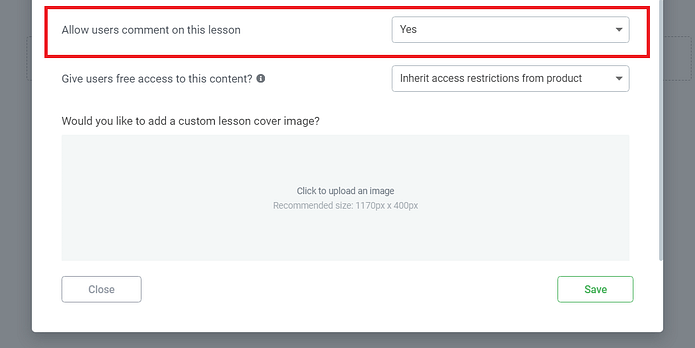
To enable this feature in Thrive Apprentice, just head to an individual lesson’s settings. Here, you can easily activate the commenting option:
9. Release Content on a Time Schedule Instead of All at Once
Thinking about releasing all your course content at once? Hold that thought. There's a good case for taking a more measured approach.
Drip-feeding content can work wonders for your students' learning experience. This strategy helps prevent overwhelm and encourages learners to engage with the material over time.
Instead of facing all the content at once, they can focus on one portion at a time.
Here's how to make it work:
Plan your content release schedule. You might unveil new lessons weekly or bi-weekly, depending on your course structure. Think about the natural flow of your material - each new piece should build on what came before.
Let your course-takers know the plan. When they know what's coming and when, they can pace themselves better.
Keep it flowing. With new content on the horizon, learners are more likely to stay engaged rather than binge-watching and forgetting.
But don't be too rigid. Some eager beavers might want to work ahead. Consider an option to unlock content early for quick learners.
Drip Settings in Thrive Apprentice
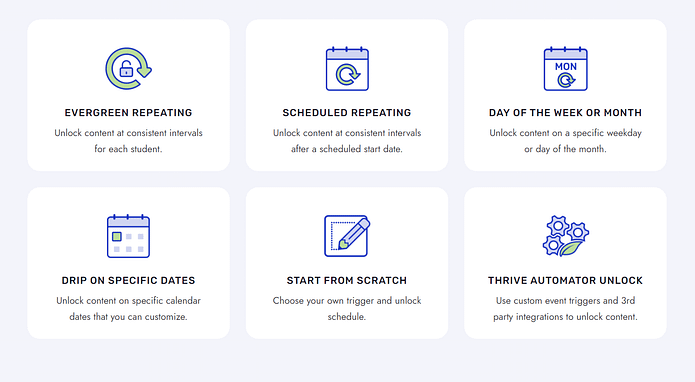
One of Thrive Apprentice’s star features is its drip functionality. This tool allows you to control what content your learners can access and when.
You can also use this tool to unlock any content based on a variety of criteria, so you can create a release schedule that works for you.
10. Provide Timely Feedback and Support To Your Students
Quick feedback and support can really make or break your students’ experience.
Think about it - when you respond promptly, your learners feel like you're right there with them, cheering them on.
So, how do you make this happen without spending all day glued to your inbox?
First off, set some ground rules. Let your learners know when they can expect to hear back from you. It sets the right expectations from the get-go.
When marking your students’ assessments, be sure to include feedback that’s practical and encouraging. If you spot a struggling learner, reach out to them to understand their challenges.
For those questions you find yourself answering over and over, why not set up a FAQ? It's a win-win - learners get instant answers, and you save time.
Improving Engagement In Online Courses: The Bigger Picture
We've covered a lot of ground with these ten strategies. But let's take a step back and look at the bigger picture.
You didn't create this course just to have people watch some videos, right? You're here to make a real difference. To teach skills that matter. To change lives, even if in small ways.
When you focus on engagement, you're doing more than boosting completion rates. You're helping Sarah finally start that business she's been dreaming about. You're giving Mark the skills to land that promotion. You're showing Priya that she's capable of more than she ever imagined.

These strategies? They're your tools to make those transformations happen. They bridge the gap between you and your learners, even when you're miles apart. They turn one-way lectures into two-way conversations.
So as you implement these ideas, keep that end goal in mind. You're not just creating a course. You're creating opportunities. You're solving problems. You're opening doors.
It might take some extra effort. You might need to revamp some of your content. But when you see your learners succeed - when you get that email saying "Your course changed my life" - you'll know it was all worth it.
Frequently Asked Questions About Online Student Engagement
I often hear similar questions when discussing this topic. Let's tackle a few common ones directly.
How do you measure student engagement in online learning?
Measuring engagement goes beyond just completion rates. I look at a few key indicators:
- Behavioral Data: Login frequency, time spent on lessons, participation in discussions, assessment submission rates, and clicks on interactive elements.
- Qualitative Feedback: Student surveys, open-ended questions in assessments, and direct comments in forums can reveal emotional and cognitive engagement.
- Performance Metrics: Beyond just scores, look at the quality of contributions, depth of understanding demonstrated in projects, and application of knowledge.
- Social Interaction: The number and quality of peer-to-peer responses, collaborative project activity, and participation in live sessions.
What are the key factors influencing student motivation in online courses?
Motivation is complex, but I've found a few factors consistently stand out:
- Relevance: Do learners see how the content applies to their goals, career, or personal life?
- Autonomy: Do they feel some control over their learning path, pace, or choices?
- Competence: Do they feel capable of succeeding, and do they experience small wins along the way?
- Relatedness: Do they feel connected to their instructor and peers?
- Clear Expectations: Do they understand what's expected of them and how they'll be assessed?
- Effective Feedback: Is the feedback timely, specific, and actionable?
How can I make asynchronous online learning more engaging?
Asynchronous learning requires deliberate design to foster engagement. My top tips include:
- Structured Interaction: Use discussion forums with specific prompts, peer review assignments, and collaborative documents.
- Varied Content: Mix videos, readings, interactive exercises, and self-assessments.
- Instructor Presence: Regularly post announcements, respond to questions, and provide thoughtful feedback on assignments.
- Real-World Application: Integrate case studies, problem-based scenarios, and opportunities for learners to apply concepts to their own context.
- Personalization: Use dynamic content, progress tracking, and tailored recommendations where possible.
What is the role of instructor presence in online student engagement?
Instructor presence is absolutely critical. It's the human element that prevents online learning from feeling like a sterile, self-study program.
- Social Presence: Be visible, approachable, and responsive. Share personal anecdotes, use a warm tone, and actively participate in discussions.
- Teaching Presence: Provide clear instructions, facilitate discussions, offer timely and constructive feedback, and guide learners through challenging concepts.
- Cognitive Presence: Encourage critical thinking, challenge assumptions, and help learners make connections between ideas. Your active involvement signals that you care, which significantly boosts learner motivation and emotional engagement.
Wrapping It Up
We've covered a lot of ground, from personalizing content to fostering discussions. The key takeaway?
Remember, engaged learners are successful learners. These strategies help create an experience that keeps learners hooked and coming back for more.
Engagement isn't just a nice-to-have – it's key for course success.
Ready to take your course to the next level? Thrive Apprentice makes it easy to put these engagement strategies into action. From course personalization to in-built assessments, it's got everything you need to create courses that truly connect with your learners.
Give Thrive Apprentice a try today and start creating online courses that bring in sales.
Also, we're curious: what's your biggest challenge when it comes to student engagement? Drop a comment below and let's keep the conversation going. Your insights could help fellow course creators and maybe even spark a future post!


