


TL;DR: The Best Elementor Alternatives (In My Opinion)
To me, it's pretty simple: the best Elementor alternatives are the builders that fix whatever pushed you to search for this in the first place. That could be performance, pricing, or the feeling of fighting your own website. I've built with all four of these, and these are the reasons why I think they should be on your list too:
- SeedProd: the easiest landing to switch to. One dashboard, templates that look like their previews, and the gentlest learning curve here.
- Divi: the other all-in-one heavyweight. Granular design control and unlimited sites on one license, if you'll invest the learning time.
- Bricks: the one Reddit keeps recommending, and after using it, I get it. Theme and builder in one, developer-friendly, performance-minded.
- Thrive Architect: the conversion-focused pick and my daily driver. I save the full case for last.
And if you're wondering whether you can skip page builders entirely and just use the block editor, I answer that below too, honestly.
If you're reading this, something about Elementor stopped working for you. Maybe your pages feel heavier than they should. Maybe the pricing changed one too many times. Or maybe you're just tired of needing a workaround for things that feel like they should be simple.
I understand the frustration more than you might expect, because my first personal website ran on Elementor back in 2021.
I built it myself, I was proud of it, and over time I still ended up moving on. So this isn't a list of thirteen builders compiled from feature pages. Let's be honest, you don't need that many options.
No, I kept this personal. This list covers the four tools I would actually move to (or recommend), based on building with every single one of them, plus straight answers about the options I'd skip.
One thing before we start: switching builders is a real decision, not a casual plugin swap. So I'll also tell you who should probably stay on Elementor, because talking you into an unnecessary migration helps nobody.
So, Why Are People Switching from Elementor?
Elementor is still one of the biggest names in WordPress, and it earned that. But a few patterns keep pushing people toward the exits, and I felt most of them myself.
The common reasons, briefly: pages that load heavier than they should, pricing that has climbed and shifted structure over the years, and the sheer number of moving parts once you're running Elementor plus a theme plus the add-ons you collected to fill gaps.
The Moment I Knew I Was Done
For me, it came down to a feeling I've described before: my website felt like it was held together by duct tape.
Everything technically worked. But too many things only worked through workarounds. When I wanted to push a design further, the builder would let me get about 80 percent of the way there and then make me negotiate for the rest. And I wasn't a beginner fumbling around; I'd built client sites with Elementor back in my freelance days. The friction wasn't a skills problem, though. I knew how to build. But I wasn't enjoying the experience
When I eventually rebuilt my site on different tools, the thing I noticed was the absence of that constant low-level fight. That's the standard I used for every recommendation below: does this builder remove the fight, or just relocate it?
How I Chose These Elementor Alternatives
Before the reviews, the criteria, because a shortlist is only useful if you know how it was made. Every tool here had to clear four bars:
Thirteen builders were on the old version of this list. Most didn't clear those bars, and I'd rather give you four real answers than thirteen maybes.
Quick Comparison: The Best Elementor Alternatives at a Glance
If you want the scan-first version, here's how the four compare on the things that matter most in a switch. Full reviews follow.
Quick Comparison: Best Elementor Alternatives
Builder | Strongest for | Vs Elementor, in one line | Price |
|---|---|---|---|
SeedProd | Beginners, fast clean launches | Less power, far less friction | Free version / paid from $39.50 first yr |
Divi | Design control, multiple sites | Same weight class, different feel, unlimited sites | From $89/yr, unlimited sites |
Bricks | Performance-minded builders, devs | Lighter and more technical | From $79/yr, one site |
Thrive Architect | Conversion-focused marketers | Built to grow lists and sales, not just pages | $99 first yr, renews $199 |
In-Depth Reviews: The Best Elementor Alternatives
Now the real substance. For each builder: what it's actually like to use, what switching from Elementor feels like, the key features, and who should pick it. My own pick sits at the end, and by now you probably know that's on purpose.
1. SeedProd: The Easiest Landing
If Elementor overwhelmed you, SeedProd will feel like a deep breath. Well, at least it did for me.
I wasn't familiar with SeedProd until 2023/2024, and I'll be honest with you. I was impressed.
Everything happens from one dashboard: your theme parts, your template kit, your editor. Compare that to the Elementor experience of theme settings in one place, builder settings in another, and add-on settings somewhere else again. SeedProd's simplicity really does speak for itself.
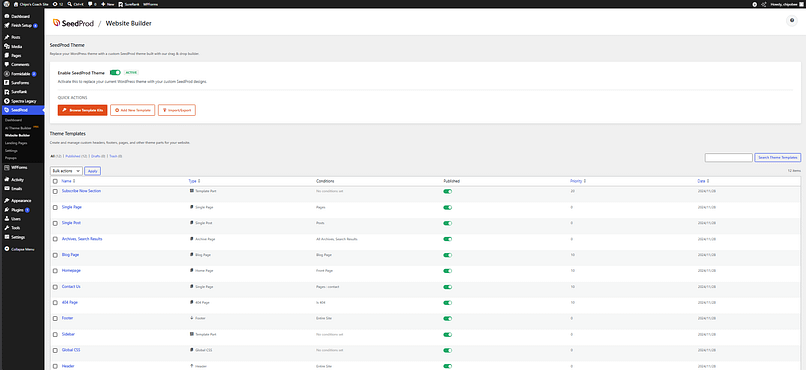
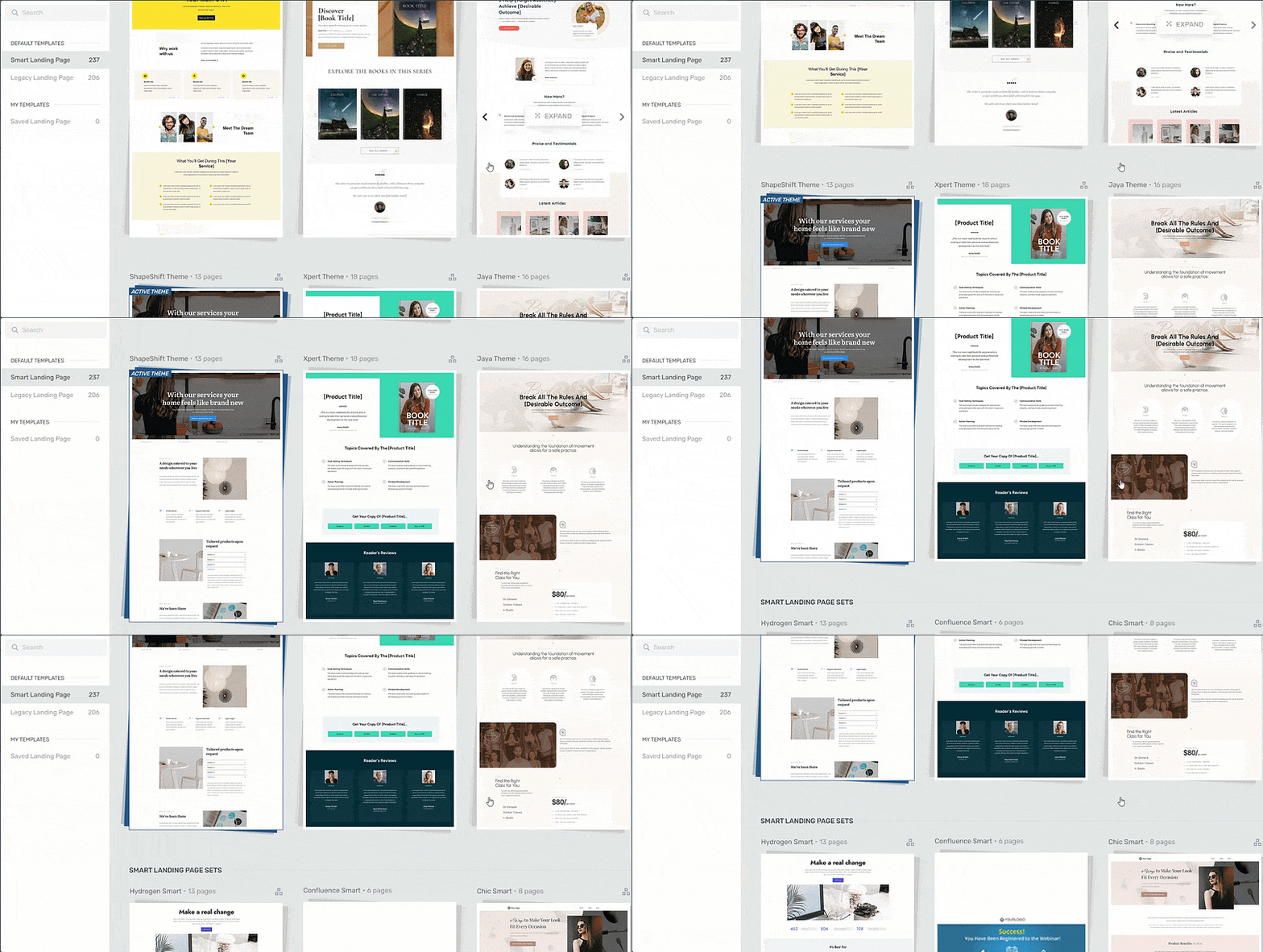
In terms of templates, man you'll be spoiled for choice. You get an abundance selection of job-focused templates to help you set up your website and landing pages quickly and easily.

Basically, you pick a template, it appears on your site looking like the template, and your job is swapping in your content. After a builder that made you negotiate, that reliability is worth a lot. And in my opinion, SeedProd's editor is far easier to use. Elementor's isn't bad, no. But it feels a bit disjointed in places (and possibly a bit more complicated for beginner WordPress users).
SeedProd also features a drag-and-drop editor that makes it easy to customize your templates (or build pages from scratch), add elements like buttons, forms, media, etc., and so much more.

The honest limits: SeedProd is simpler than Elementor, and that cuts both ways. If you were using Elementor's deepest design features, you'll notice the ceiling. And my one recurring nitpick applies here too: I'd like the editor to be more point-and-click, since you often edit text through the sidebar rather than directly on the page.
Key features for switchers:
Who should switch to it: ex-Elementor users who realized they were using 20 percent of the tool and paying for the rest. Beginners who want the site built more than they want the builder mastered.
Starting Price: SeedProd has a free version. Paid plans start from $39.50 for your first year.
2. Divi: The Other Heavyweight
I'll be honest, the way I have been in my other reviews here: Divi and I have a complicated history. I've long felt it does too much for the average personal user. But Divi 5 genuinely improved things, and when I went back in recently, the setup was smoother and the old frustrations were quieter.
Here's why it belongs on a switching list anyway: if you're leaving Elementor because of pricing or ecosystem fatigue, but you LIKED the power, Divi is the like-for-like move.
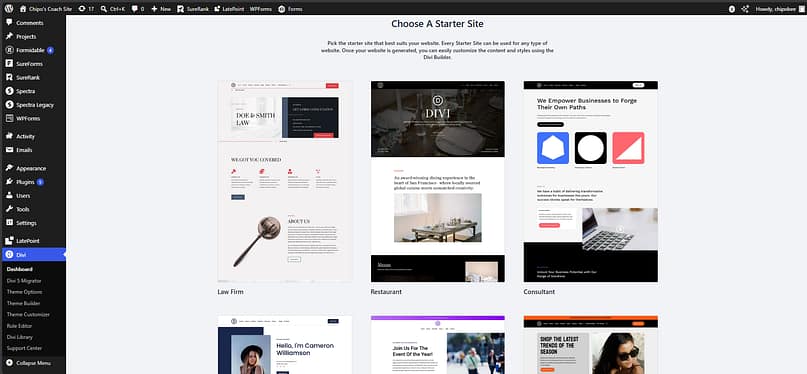
It matches Elementor's weight class: point-and-click control over every element, a huge layout library, and enough functionality that you won't miss features. And its pricing carries a genuine switching incentive: one license covers unlimited websites, where Elementor's plans meter you by site count.
The warning is the same one I give everywhere: the Divi editor is heavy machinery.
Selecting and styling every element individually is power if you design for a living, and fatigue if you just want your site updated between other responsibilities.
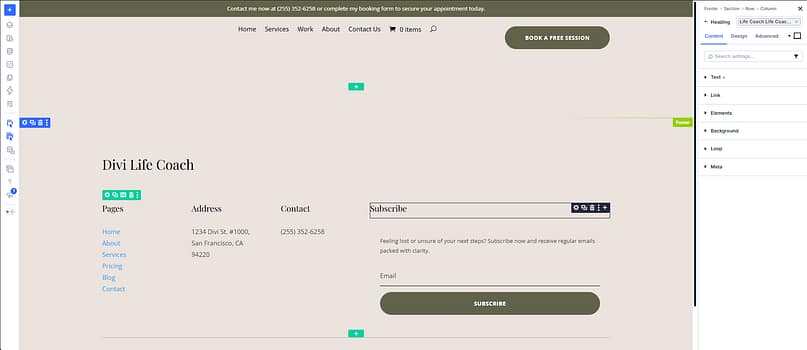
You'd be trading Elementor's particular frictions for Divi's particular depth, and you should know that's the trade.
Key features for switchers:
- Unlimited sites on one license: the pricing structure Elementor moved away from.
- Granular visual control: every element customizable, on par with what you're used to or beyond it.
- Quick Sites starter: generates a full starter website to customize rather than a blank page.
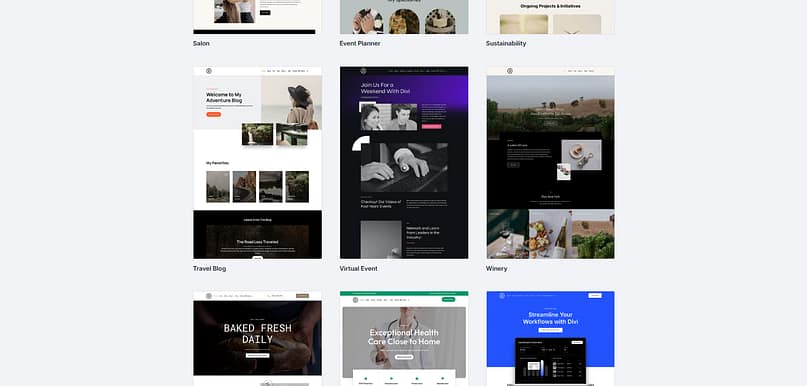
- Huge layout library: coordinated designs for practically any site type, travel blogs to agencies.
Who should switch to it: designers, agencies, and power users leaving Elementor for structural reasons (pricing, direction) rather than complexity reasons. If Elementor felt like too much, Divi will too.
Starting Price: Divi starts from $89 per year for unlimited websites.
3. Bricks: The One Reddit Keeps Recommending
I first started hearing about Bricks when I joined the WordPress corners of Reddit, where entire threads are dedicated to exactly this question and Bricks keeps coming up in the answers.
Knowing that that kind of community enthusiasm can be manufactured, I went in curious. After using Bricks on my own: the enthusiasm is real, and I can see why.
Bricks is both the theme and the builder, which removes a whole layer of the Elementor stack (no more pairing a builder with a theme and hoping they get along).
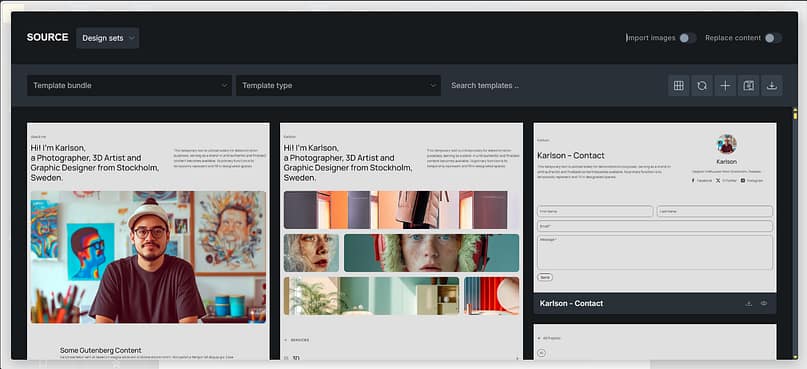
It has a strong performance reputation, and the editor meets you at your level: use a design set as-is, drag and drop your own layouts, or go deep with custom code, global classes, and reusable components. The getting-started guide deserves a specific shout-out, because I actually read it and it actually helped.

The honest friction: the menus took me time.
I'd occasionally lose my way between panels, and the page-and-template workflow has a bit of back-and-forth that can feel less immediate than tools that walk you through one complete website. That read to me like a learning curve rather than a design flaw, but if you're switching to ESCAPE a learning curve, hear that clearly.
Key features for switchers:
- Theme and builder in one: one less moving part than your Elementor setup had.
- Performance-minded build: the clean-output reputation is a big reason leavers land here.
- Meets you at three levels: design sets for speed, drag-and-drop for control, code for developers.
- Wireframes and design sets: structure-first blocks plus fully designed template collections.
Who should switch to it: the technically curious. Ex-Elementor users who want more control and better output and are willing to spend a weekend learning the editor's logic. No free version, so it's a considered purchase.
Starting Price: Bricks has no free version. Pricing starts from $79 per year for one website.
4. Thrive Architect: Where I Actually Landed
You know I work at Thrive Themes, so let me put the disclosure and the receipt in the same sentence: Thrive Architect is the builder I moved to after Elementor, it runs my own personal website today, and I use it at work close to every week. Every other tool on this list got measured against it in my head, because it's the one I know from years of daily use, not a testing session.
What sold me, and what still holds: the distance between an idea and a finished page is shorter here than in anything else I've used. You open the editor, you're editing. True front-end editing, no preview-refresh dance. After the duct-tape era of my Elementor site, the thing I noticed most was what was missing: the workarounds.
But the real reason Architect is my pick for a specific kind of switcher is what happens after the page looks good.
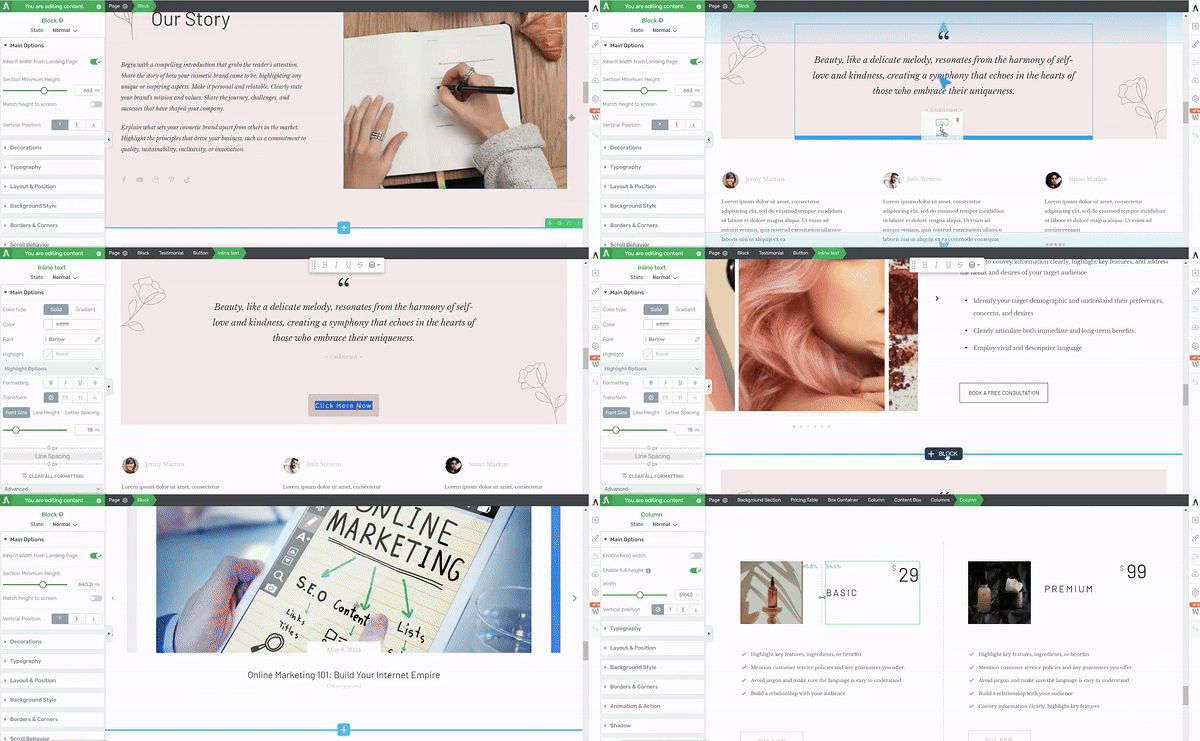
The templates are built around marketing goals (lead magnets, webinars, sales pages), the conversion elements are native rather than bolted on, and with Thrive Optimize you get real A/B testing inside WordPress: duplicate a page, change the headline, split the traffic. If your website is meant to grow a list or sell something, that layer is the difference between a page that looks finished and a page that performs.
The honest limits, because I promised them for every tool: there's a learning curve if visual builders are new to you. The deepest conversion features arrive with Thrive Suite, which is a bigger investment.
Key features for switchers:
- True front-end editing: what you see while building is what visitors get, with no workaround tax.
- Native A/B testing (with Thrive Optimize): split-test headlines and layouts inside WordPress, no external tools.
- Goal-built templates: lead magnet, webinar, and sales layouts designed around campaigns, not just aesthetics.
- Part of Thrive Suite: opt-ins, quizzes, testimonials, and courses in one connected system instead of an add-on patchwork.
Who should switch to it: marketers and business owners whose site has a job: growing an email list, selling a course or product, converting traffic. If that's you, this is the strongest move on this list, and it's the one I made.
Starting Price: Thrive Architect is $99 for your first year and renews at $199 per year. Thrive Suite, which includes Optimize for A/B testing, starts at $299 for the first year.
What About Kadence, Breakdance, and Oxygen?
A few names you'll definitely meet while researching, and my straight answer on each, because I haven't built full sites with these and I'd rather tell you that than fake a review.
Can You Skip Page Builders and Just Use the Block Editor?
This is Reddit's favorite answer to the Elementor question, so it deserves a real response rather than a dodge.
Honestly: the block editor has made leaps and bounds, and paired with something like Kadence Blocks it can build a genuinely respectable website for free. If your site is content-first, your design ambitions are modest, and your budget is zero, that's a legitimate path and I won't pretend otherwise.
But I still find it limited compared to a dedicated builder, and I say that as someone who has given it honest chances across years of building. The granular design control, the goal-built templates, and the conversion tooling just aren't there at the same level. My rule of thumb: if your website is a publication, blocks can carry you. If your website is a business, a dedicated builder earns its keep.
Is Elementor Still Worth It in 2026?
Since people ask this exact question, here's my honest answer: yes, for some people Elementor is still worth it in 2026. It remains one of the most capable and best-supported builders in WordPress, and if it isn't actively frustrating you, switching costs more than it returns.
The calculus changes when you recognize yourself in the reasons above: pages heavier than they should be, pricing that no longer fits how many sites you run, or my duct-tape feeling, where too many things only work through workarounds. Those don't age well. They compound as your site grows, and every month you wait adds pages you'll eventually rebuild.
FAQ: Elementor Alternatives
Quick answers to the questions I see most from people considering the switch, based on the tools above.
Are there any good free Elementor alternatives?
Yes, three real paths: SeedProd's free version (simple landing pages and coming-soon pages), Kadence Blocks with the block editor (a free, Gutenberg-native setup), and the block editor alone if your needs are basic. Bricks and Thrive Architect have no free tiers; they're considered purchases.
What's the best Elementor alternative for WooCommerce?
Divi and Bricks both handle WooCommerce layouts well, with Divi offering more pre-made shop designs and Bricks offering cleaner output. If your store's growth depends on landing pages and email capture more than shop-page styling, Thrive Architect with Thrive Suite covers that side.
Are there Elementor alternatives with lifetime pricing?
Bricks and Breakdance have both offered lifetime licenses; terms change, so check their current pricing pages before deciding. None of the annual-only tools here (SeedProd, Divi, Thrive Architect) currently lead with lifetime deals, though Divi has offered lifetime plans historically.
Which alternative is fastest or best for performance?
Bricks has the strongest performance reputation of the four, and it's a big part of why the developer community recommends it to Elementor leavers. That said, real-world speed depends more on your images, hosting, and discipline than on the builder's brand.
What's the most beginner-friendly Elementor alternative?
SeedProd, without much contest. One dashboard, templates that import looking like their previews, and the shortest path from install to a live page of anything on this list.
Can I switch from Elementor without rebuilding my pages?
Mostly no, and I'd rather tell you now: pages built in Elementor are built from Elementor's elements, so a new builder means rebuilding them (Breakdance advertises Elementor migration tooling, worth testing on a staging site if that's decisive for you). My advice from having done a rebuild: treat it as a redesign opportunity rather than a copy job, start with your highest-traffic pages, and keep Elementor active until the last one is moved.
Found Your Elementor Alternative? Here's Your Next Step
You don't need to decide tonight, and you definitely don't need to migrate this weekend. Pick the one review above that sounded like your situation, grab the free version where one exists (SeedProd, or Kadence Blocks if you're going the block route), and rebuild ONE page you know well. That single test will tell you more than any comparison table, mine included.
And if your site's job is conversions, see what Thrive Architect can do. It's the switch I made, and years later I'm still not fighting my website.


