


TL;DR: The Best Landing Page Plugins, Tested
I've built landing pages with every plugin on this list, most recently during my hands-on WordPress themes testing and my OptimizePress comparison. Here's where I landed:
- Best for conversion-focused marketers: Thrive Architect. Built-in A/B testing (with Thrive Optimize), conversion elements out of the box, and the fastest idea-to-published-page workflow I've used. My daily driver.
- Best for beginners and fast setup: SeedProd. The most seamless setup I tested: one dashboard, templates that import properly, what you see is truly what you get.
- Best for design freedom: Elementor Pro. Pixel-level control and a massive ecosystem, with a performance trade-off you need to manage.
- Best for designers who want granular control: Divi. Heavy machinery: powerful if you'll invest the learning time, overwhelming if you won't.
- Best for all-in-one funnels and memberships: OptimizePress. Pages, checkouts, and membership tools in one plugin, with a clunkier editor as the price.
The detailed breakdowns below cover what each one is actually like to use, where each one frustrated me, and who should pick what.
I won't even lie... Landing page builders are one of the most confusing corners of the WordPress ecosystem.
I know this because, over the years, I've tested nearly every plugin that promises to help you build high-converting pages. Some are great for total beginners who just need a simple sign-up form. Others are built for agencies that demand pixel-perfect control. And a few manage to give you just enough of both, which is often where the real magic happens.
Here's the deal: finding the best landing page plugin for your site isn't about chasing the one with the most features. It's about matching the tool to your workflow, your budget, and your actual marketing goals. If you don't care about A/B testing, paying for a tool built around it is throwing money away.
I'm going to walk you through the five contenders I've personally used, explaining exactly who each one is for and why. By the time we're done, you'll know exactly which builder to install next.
(New to landing pages entirely? Start with what a landing page is and come back.)
How to Choose the Best Landing Page Plugin for Your Business
Before the tools, the criteria. These are the six things that actually determine whether a builder serves you, and they're the lens for every review below.
Ease of Use & User Interface
You want a tool that feels intuitive, not like piloting a spaceship. A good drag-and-drop builder lets you translate ideas into a page without wrestling the interface. The faster you can get a page built and launched, the more time you have for actual marketing.
Core Features: Drag-and-Drop, Templates, & Integrations
Every builder has drag-and-drop. The question is how good it is: granular control or clunky fighting? Templates need to be conversion-focused, not just pretty. And your landing page isn't an island: it needs to talk to your email service, your CRM, and your analytics, natively where possible.
Conversion Optimization Tools (A/B Testing, Forms, Scarcity)
A landing page's job is to convert, so the builder should help. Native A/B testing lets you test headlines and layouts without extra tools. Lead forms are a must, and elements like countdown timers and testimonial blocks move real numbers. If you have to bolt on three plugins to run a basic campaign, that's a red flag.
Performance & Speed Impact
Slow pages kill conversions and rankings. Some feature-packed builders generate heavy code; the lean ones keep Google and your visitors happy. I always check the code output's weight.
Pricing & Value
Look past the sticker price: what's included, and what does it renew at? A tool that bundles A/B testing or a conversion suite can cost less than stacking separate subscriptions.
Customer Support & Documentation
When something breaks mid-launch, you want real support and clear docs. Community forums count for a lot here too.
My Top Five Landing Page Plugins, Side by Side
Quick Comparison: The Five, Side by Side
Plugin | Primary Focus | Key Tools | Starting Price (Annual) | Who Should Use It |
|---|---|---|---|---|
Thrive Architect | Conversion & Marketing | Native A/B testing (with Optimize), quizzes, scarcity | $99/yr first year, renews $199 | Marketers focused on ROI |
SeedProd | Speed & Simplicity | One-dashboard setup, coming-soon modes, clean templates | Free; paid from $39.50/yr | Beginners who want the smoothest start |
Elementor Pro | Design & Flexibility | Full theme builder, popups, forms | $59/yr | Designers and agencies wanting control |
Divi | Granular Design Systems | Quick Sites, layout packs, Divi AI (Pro) | $89/yr (unlimited sites) | Designers and agencies with learning time |
OptimizePress | All-in-One Funnels | Funnels, checkouts, memberships, 400+ templates | $99/yr, renews $129 | Funnel-first marketers who want one plugin |
The Best Landing Page Plugins for WordPress (My Hands-On Breakdown)
Quick word on the order before you scroll: you already know my pick from the TL;DR, so saving Thrive Architect for last isn't suspense. It's fairness. The other four get their full case made first, and if the final review still reads like the obvious answer, you'll know it earned that on the merits.
I started learning more about SeedProd when Thrive Themes joined Awesome Motive.
I had known of SeedProd before then as a theme and page builder, but I had never really used it. And when I finally got to know the tool for myself during my hands-on testing, I was just like, okay, this is a really good tool.
Everything Starts From One Dashboard
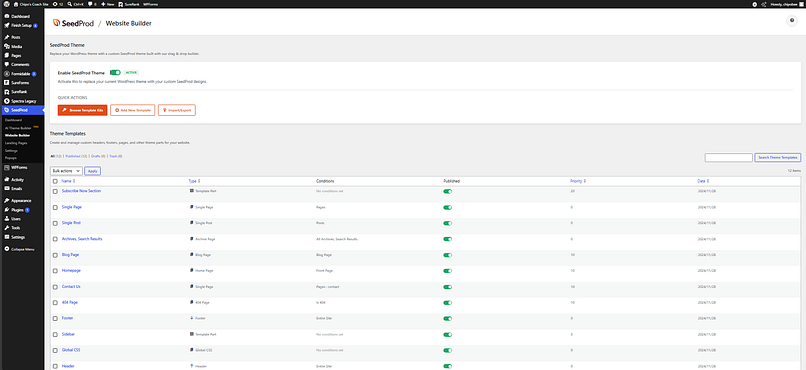
You get the plugin, set it up, and it appears right there in the left sidebar. You click on it, and you configure everything from there.
With some other builders and theme-plugin combinations, you go to one place, then another place, then figure out which editor you're supposed to be using now. SeedProd navigated that by giving you one central dashboard. Once you choose to build with it, most of what you need is right there, without jumping between the WordPress Customizer, the block editor, and three other places.
That is what ease of use means to me.
What You See Is Actually What You Get
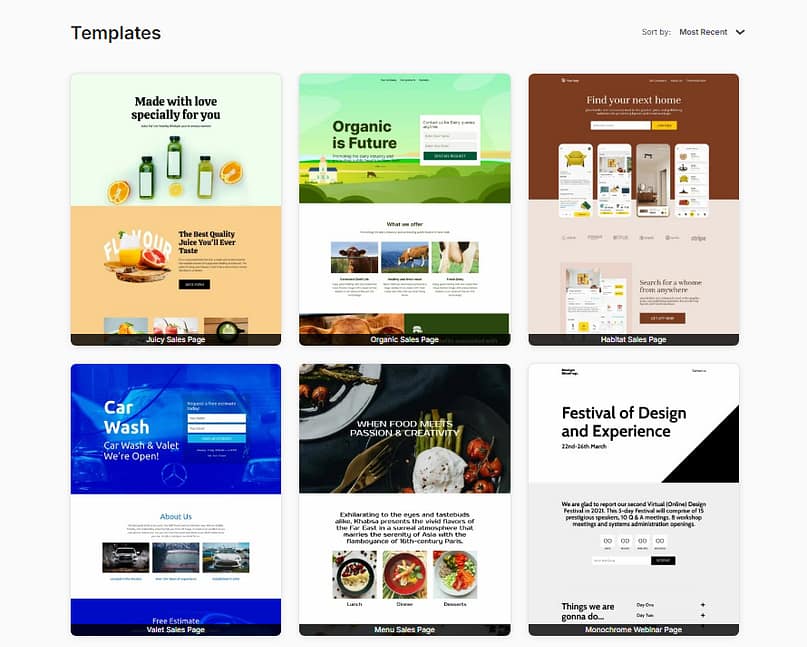
The template kits are plentiful and centred around particular industries, so you really can find something that fits your niche. And when you select a template, what you see is truly what you get: it's here now, and it's on me to change the images, the writing, the colors, or elevate it into something better. There's less of that horror of "the template I selected is not what I'm seeing on my page."
For landing pages specifically, the free version genuinely covers the basics: a simple landing page, coming-soon page, or maintenance page. For complete lead-gen flows or a store, you'll want a premium plan.
My One Small Nitpick
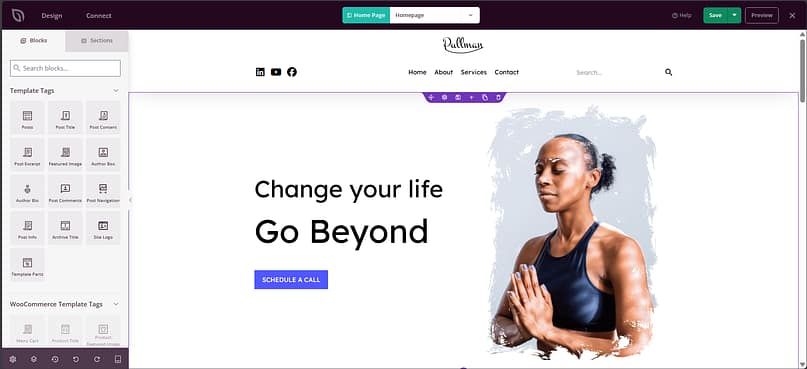
I wish the editor were a bit more point-and-click. When you click on some text, you edit it through the sidebar, and I'm just used to diving in and editing directly on the page. It's not the end of the world, but mid-edit, you sometimes want to work on something right there instead of moving your attention to the sidebar.
Who It's For
Beginners who want a visual builder that doesn't take long to understand, and business owners and agencies that want good-looking pages without every project becoming complicated. I'd reach for it before a couple of the others on this list purely for the seamlessness. One honest note: for serious split testing you'll need a separate tool, because A/B testing isn't native.
Pricing
- Free version: genuinely useful for landing, coming-soon, and maintenance pages.
- Paid: from $39.50 first year; the Pro tier ($199.50/yr) adds the full template library and integrations
Fun fact: Elementor was my introduction to WordPress page builders. During my freelance days I was a Wix, Squarespace, even ClickFunnels person, until a client balked at ClickFunnels pricing and I said, "Well, you could use WordPress." I set up hosting, installed WordPress, landed on Elementor, and replicated their whole funnel right there. Did it take me ages? Yes. I was a beginner. But that's the power in this builder.
My first personal website was an Elementor website too. So this review comes from years of history, not an afternoon of testing.
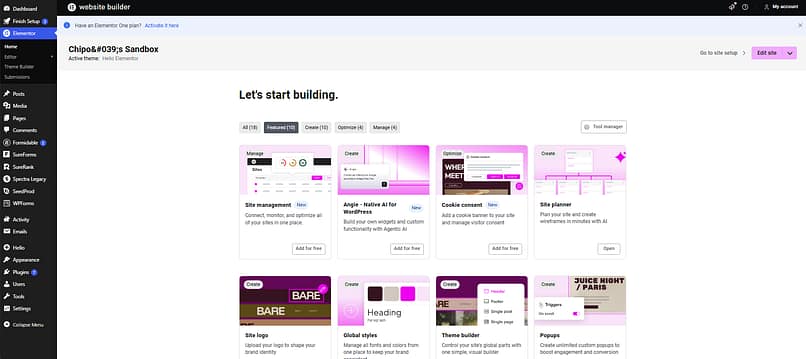
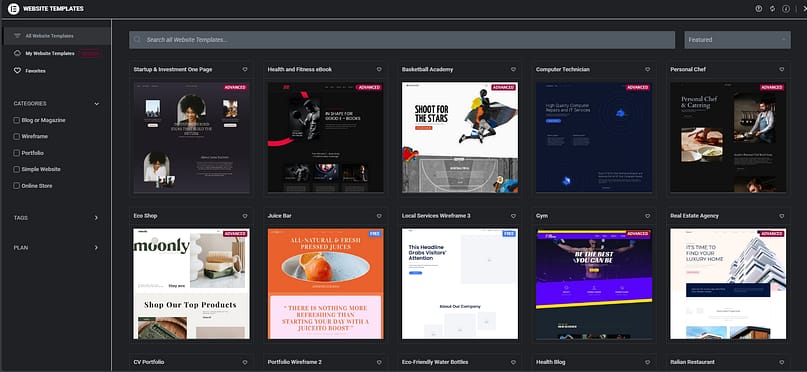
Elementor is popular for a reason: the template library is massive, the drag-and-drop editor gives you real freedom, and it works with just about any modern theme. There's enough variety without feeling overwhelming, and because of the builder's strength, you can take any template and customize it fully.
Where It Started to Feel Janky
My gripe, and one of the reasons I eventually started looking for alternatives: past a certain point of customization, it sometimes felt like my website was being held together by duct tape. Features worked, but they'd need a workaround, or the builder wouldn't let me express my fullest creativity. The more granular you get, the more it can feel that way, especially if you're not experienced with WordPress.
If you just want a solid website with a capable page builder, you can absolutely get that from Elementor. The duct tape shows up at the edges.
Who It's For
Designers, agencies, and anyone whose priority is design flexibility across the whole site, headers and footers included. The free version is a genuinely good on-ramp; Pro unlocks the theme builder, popups, and forms. Watch the performance: it's the heaviest code output on this list, so pair it with good hosting and restraint.
Points to Consider
- Heaviest performance footprint of the five; manage it deliberately.
- No native A/B testing; you'll need an external tool.
- Design paralysis is real when every pixel is adjustable.
Pricing
- Elementor Pro: from $59/yr for one site; the Expert plan ($199/yr) covers 25 sites.
I'm going to keep it 100 with you: Divi hasn't really been one of my favorite tools. I've always felt it was doing too much for the average personal user. But someone told me, "Divi 5 is so much better," so during my themes testing I went in with a fresh perspective to see whether it could change my mind.
The honest verdict: it's better, and it's still a lot.
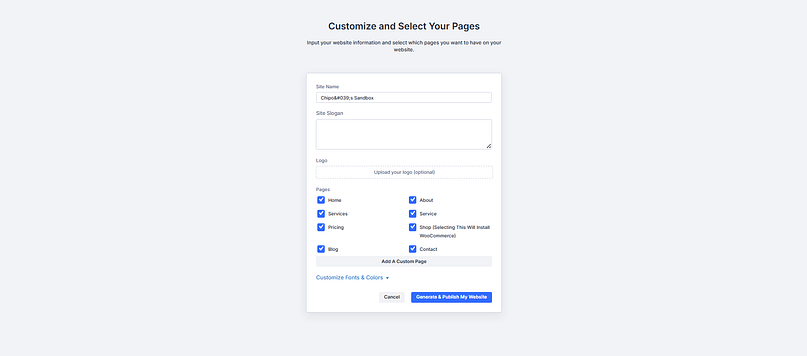
Quick Sites got me a starter website up relatively quickly, and compared to my late-2024 experience, the editor felt smoother. I didn't hit the same frustration setting things up. But the relationship between Quick Sites and Divi's layout packs still feels disconnected: you generate a site one way, then pull page layouts from a separate library, and the transition between them isn't cohesive. I prefer tools where the path from setup to customization is completely straightforward.
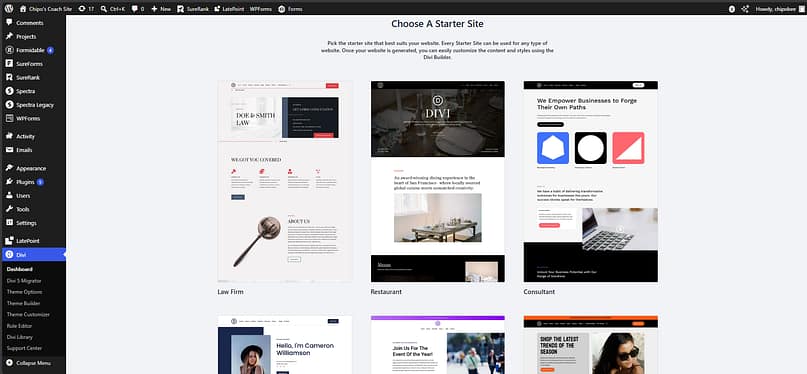
The editor itself is heavy machinery.
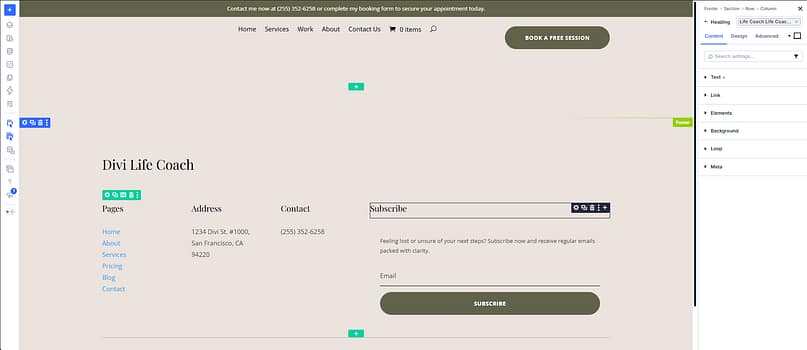
I'm talking about point-and-click selection with a settings panel, intricate control over every element. If you're a web designer who does this for a living, that granularity is the appeal. If you're a busy professional trying to get something solid live, it might be frustrating. I don't think the editor is bad. I think it's different, and more complex than Elementor's drag-and-drop or Architect's direct editing.
Who It's For
WordPress designers, developers, and builders-of-many-sites: the layout pack library is huge, the customization is deep, and one license covers unlimited websites, which is quietly one of the best agency deals in WordPress. If you're a beginner or a time-poor business owner, I would not recommend letting Divi be your first rodeo.
Points to Consider
- The learning investment is real; budget time, not just money.
- Quick Sites, layout packs, and page editing feel like three systems, not one.
- No native A/B testing for landing pages.
Pricing
- Divi: $89/yr for unlimited websites; Divi Pro (adds Divi AI and services): $277/yr.
I compared OptimizePress head-to-head with Thrive Architect across different sites and setups, so this take comes from real builds, not a features page.
OptimizePress is aiming to be your all-in-one marketing machine: a visual page builder plus built-in funnels, checkout pages, popups, webinar signups, and even membership sites. Everything but the kitchen sink, in one plugin.
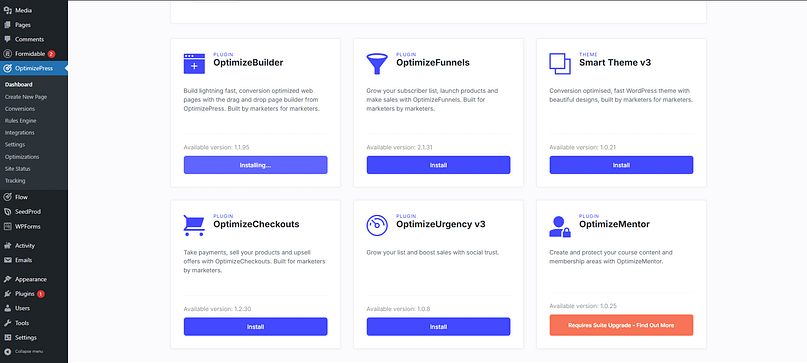
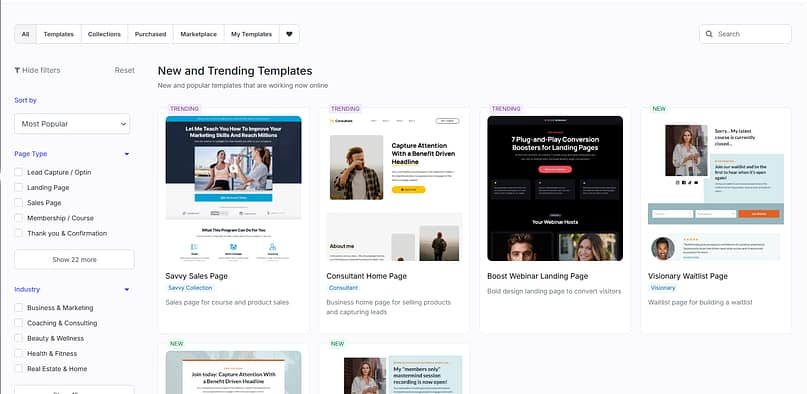
The setup makes a genuinely good first impression. Everything lives neatly in the WordPress dashboard, and the first menu option is, thankfully, "Create New Page." No hunting, no wild-goose-chase wizard. And the template library is one of the best in the category: over 400, most of them built for marketers, including complete matching funnel sets for your landing, opt-in, and confirmation pages.
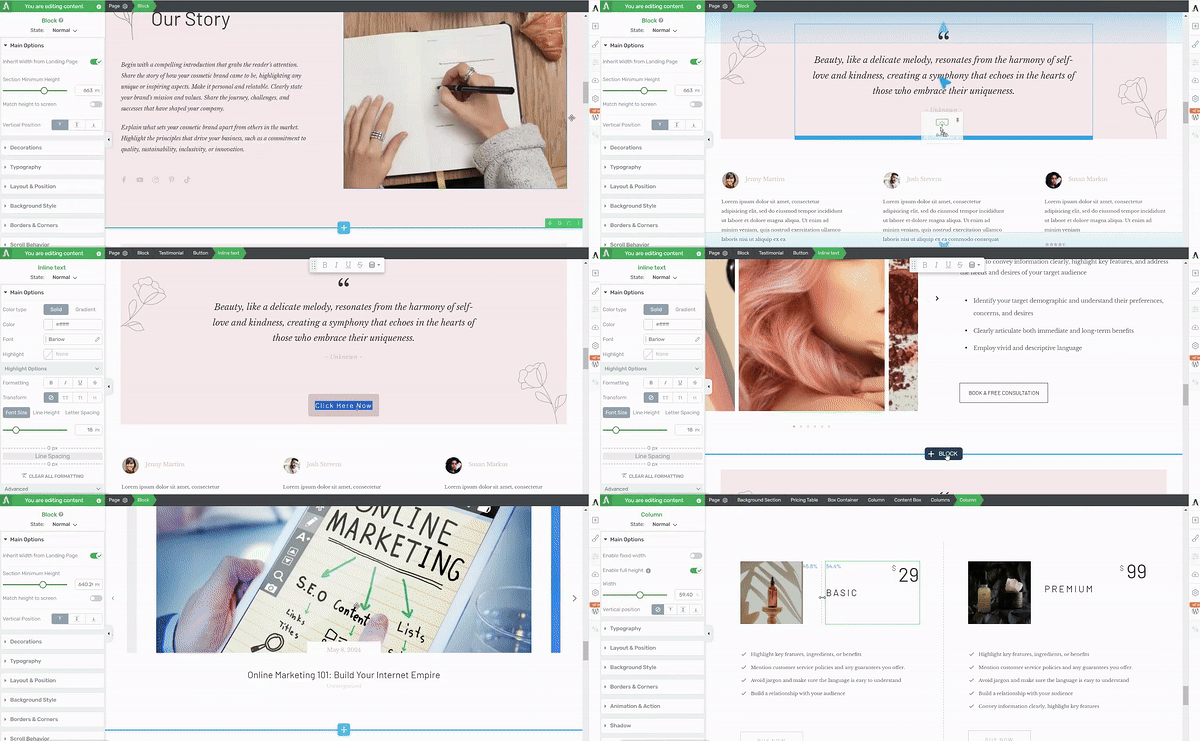
Where it got sticky for me was customizing those templates inside the builder. Not impossible, but clunky: I had moments of clicking the wrong thing or not figuring out how to adjust a block the way I wanted. If you're used to visual editing where everything responds instantly, you'll need a little patience.

OptimizePress point-and-click editor
Who It's For
Funnel-first marketers who want pages, checkouts, and memberships in a single plugin, and who'd rather accept a stiffer editor than run three subscriptions. If your model is "landing page into checkout into member area," OptimizePress covers that span better than anything else on this list. If page-building speed and editor feel matter most, Architect wins that fight (I scored them head-to-head in the full comparison).
Points to Consider
- The editor's customization flow is the clunkiest of the five here.
- The funnel and membership tools that justify it live on the Plus tier and up.
Pricing
- Starter: $99/yr (renews $129), one site. Plus: $149/yr (renews $199), the tier where funnels and payments unlock. Ultimate: $179/yr (renews $249).
I use Thrive Architect almost every week, and what I love about it is how fast it is to go from rough idea to finished, tested page.
You open it, click the green button, and you're in. There's no digging through settings or waiting on previews, just drag, drop, and tweak until it looks right. That immediacy makes a huge difference when you're trying to get a campaign live quickly.
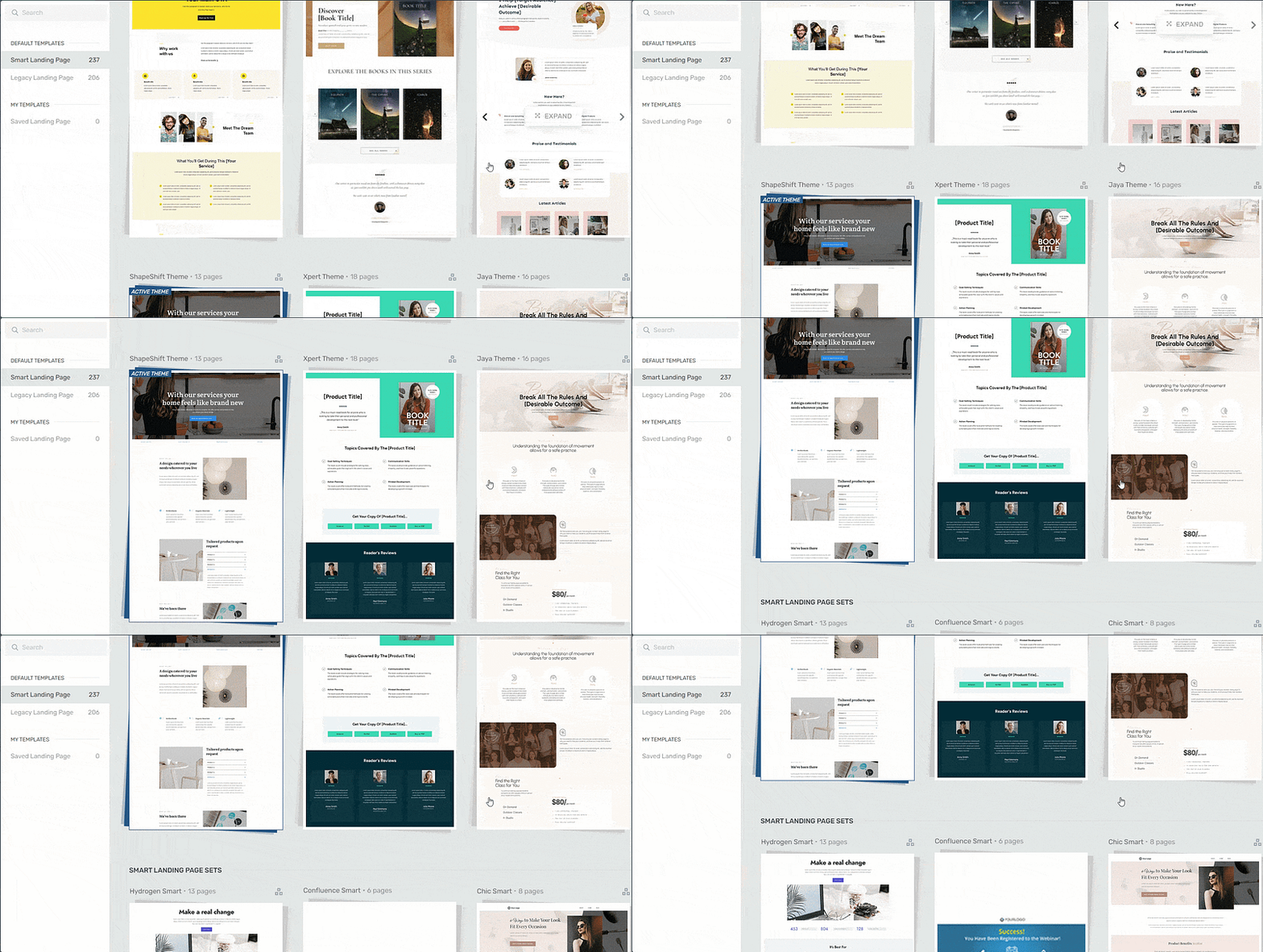
The templates are goal-focused. They aren't just pretty layouts; they're built for real marketing goals like webinars, sales pages, and lead magnets. When I scroll through them, I often catch myself thinking, oh, that could work for X campaign, which is a sign they're designed with strategy in mind.
Who It's For
The marketer who values conversions above all else. If you're serious about growing your list, selling a course, or running high-ROI campaigns, the learning curve is worth the investment.
Key Features
- Conversion-focused templates and elements: webinar, lead magnet, and sales layouts, plus testimonial blocks, countdown timers, and CTA elements.
- Native A/B testing (with Thrive Optimize): duplicate a page, change a headline, route traffic to both versions immediately. Watching the data confirm a design hunch is one of my favorite moments as a marketer.
- True front-end editing: what you see while building is what visitors get.
- Part of Thrive Suite: works with Thrive Leads (popups), Quiz Builder, and Ovation as one system instead of a plugin patchwork.
Performance, SEO, and Integrations
For a feature-rich builder, Architect is well-optimized: clean enough code that you won't see major performance hits if you're sensible with images. SEO lives with your SEO plugin (AIOSEO, Rank Math); Architect's job is clean HTML and fast pages, and it does both. Email integrations cover the majors (Brevo, Kit, ActiveCampaign), and the Suite connection means lead gen, quizzes, and testimonials share one system.
Points to Consider
Pricing
- Standalone: $99 for your first year, renewing at $199/yr. [confirm at publish]
- Thrive Suite (all Thrive tools, including Optimize for A/B testing): $299 first year.
I'm giving you the renewal numbers upfront because I've complained about renewal surprises in other reviews, and I'm not making an exception for us.
Good Builders, Just Not My Five
- Beaver Builder: the steady hands of WordPress builders. Exceptionally clean code, rock-stable, loved by developers, and light on conversion features: no native A/B testing, and the flash is deliberately absent. If stability is your religion, it's your tool; for marketing-first landing pages, the five above serve you better.
- Leadpages: not a plugin, a hosted SaaS you connect to WordPress. That's its pitch: your landing pages live on their fast servers, with native A/B testing, and your site carries none of the weight. The trade is a real monthly subscription (from $37/mo billed annually [confirm at publish]) and less design freedom. Worth it mainly for agencies running many campaigns.
- Bricks: the builder-nerd favorite I kept seeing recommended when I joined the WordPress corners of Reddit, and after using it in my themes testing, I can see why. It's a theme-and-builder in one, though, more site builder than landing-page plugin, which is why it's a mention here and a full review in my themes guide.
Free Landing Page Plugins for WordPress: Are They Worth It?
SeedProd, Elementor, and Beaver Builder all have free versions, and the block-editor route (Kadence Blocks, Getwid) can produce a respectable basic page too.
My honest take: start free to get a feel, but if you're serious about conversions, you'll outgrow it quickly, and a premium builder usually pays for itself in captured leads.
Frequently Asked Questions About WordPress Landing Page Plugins
What is the best landing page plugin for WordPress?
Thrive Architect, if conversions are the goal: it's the only plugin here with native A/B testing (through Thrive Optimize) and conversion elements built in rather than bolted on. SeedProd is the best pick for beginners who want the smoothest possible start, Elementor Pro for maximum design freedom, and OptimizePress if you want funnels and checkouts inside one plugin.
What's the best free landing page plugin for WordPress?
SeedProd's free version is the strongest for landing pages specifically: it covers a basic landing page, coming-soon page, or maintenance page properly. Elementor's free tier is a good on-ramp too if you want broader page building. Just know where every free plan hits the wall: A/B testing, advanced conversion elements, and the full template libraries are always premium.
Do I need a landing page plugin if I already use a page builder?
They're the same category of tool, so no, you don't need both. What you might be missing is the conversion layer: most general page builders (Elementor and Divi included) have no native A/B testing, no scarcity elements, and no built-in lead-capture strategy. If your pages exist to convert, either add a testing tool to your current builder or use one with the conversion tooling included.
Can I build a landing page with just the WordPress block editor?
Technically, yes, and block libraries like Kadence make it more realistic than it used to be. Practically, you'll assemble the missing pieces by hand: a plugin for forms, another for countdown timers, workarounds for layout control, and still no A/B testing. A dedicated builder earns its price in the time you don't spend duct-taping that stack together.
Which landing page plugin has built-in A/B testing?
Thrive Architect, through Thrive Optimize: duplicate a page, change one element, and split traffic between versions natively in WordPress. Among the alternatives, Leadpages (a hosted SaaS, not a plugin) includes native testing; SeedProd, Elementor, Divi, and Beaver Builder all require external tools for serious split testing.
Is a sales page the same as a landing page?
A sales page is one type of landing page: a focused page with a single job, in this case selling one offer, usually longer and heavier on proof and objection handling. Every plugin in this roundup builds both; the conversion-focused ones (Thrive Architect, OptimizePress) ship templates purpose-built for each.
Final Thoughts: Pick the Builder That Matches Your Job
Every tool on this list can build you a good-looking page. The difference is the job each one is built for: Architect for converting, SeedProd for starting smoothly, Elementor for designing freely, Divi for design systems at scale, OptimizePress for owning the whole funnel in one plugin.
I've used all five. For growing a business through landing pages, Thrive Architect is my go-to, but you'll get good results from any of these top landing page plugins.
So, pick the one whose job matches yours, and go build something that converts.


Thrive suite has been a game changers in my business!
I use Thrive Architect for all landing pages, it has a great range and it’s easy to use
I have experience with Elementor, Divi, and Thrive , and Thrive is better by a country mile. Elementor is a bit clunky and definitely has a more pronounced learning curve. Divi is a bit more user friendly than Elementor but is not as robust. Thrive has both of them beat. Very user friendly and a ton of features and control.
Looks like a very powerful app!
seed pod is great for beginers, it helped me out alot
This has been very helpful
Landing pages are SO important, you’d think it would be pretty obvious, first impressions last!
Well written and very informative post
Thanks for the info
Thank you for the information
Ich würde mich immer wieder für die Thrive Suite entscheiden.
I would like to try it when I have more time. Sounds interesting.
In all honesty, I purchased Thrive Suite because of all the features. Even though there is a learning curve, when I compare what is offered with what others are offering, there is no comparison. Thrive is the real deal. Thank goodness for their library of videos, which have helped me navigate some of the “techy” things I am a novice to.
Wow, there’s much more to consider than a newbie like me could have imagined. Thanks for breaking it down.
I’ve been a customer for years so it’s always Thrive Architect for me!
I’ve used the free version of SeedProd before, is the premium version worth it?
As an intermediate WordPress user (and I had used lots of payed builders) adding some smooth effects and eye catching sections makes a big difference for the clients, having template to redesign it’s always nice to have, I live to integrate some gsap scroll into my projects
good information
I have used Thrive Themes on two of my business. Love the extra information and how you keep generating more.
Thank you – nice and concise
You’re welcome, Tomas 🙂 Thanks for reading!
Good comparison and I agree. I’ve tried most of those and still come back to Thrive Themes and their excellent Architect plugin every time. Their suite of tools and themes has everything I need and more, plus they are fully compatible with each other and just work well. I’ve always found Elementor, Divi and Beaver to be too clunky and wonder if the people saying they are the best have actually tried the best?
Thanks for sharing these insights on landing page plugins. I’ve used Divi and WPForms before, but your breakdown of Thrive Architect has me convinced to give it a try!
The block templates look great. Definitely an easier way to not overthink how the landing page should look.
I think it will take me a bit of time to go through it all and see if this is right for me
Love working with Thrive Architect and all the pre-built Theme Landing pages. Love easily being able to adapt and build my own pages and save as templates. All the easy to use functionality such as setting up global brand templates, etc.
I would like to thank the author of this insightful article
Nice Features.
enjoyed it
I really like how you’ve highlighted the strengths of each option and provided practical insights for different needs. Thrive Themes, in particular, stands out for its user-friendly design and conversion-focused features. This guide is super helpful for anyone trying to boost lead generation and sales through effective landing pages.
Thanks Ratnesh 🙂
I am using this software for years and very happy with it and the integration with other software. Thrive is always adding new features and options. Also the free Thrive Automate is great to try and consider the whole suite.
Amazing, been looking to develop a site for my business!
Very clear. Thank you
These look really slick!
Definitely simplified my wordpress site build…
Simple yet interesting
Informative ,,,
a relevant comment
I wanna win
These are amazing ideas. Thanks for the great choices. Going to go make my landing page now!