
TL;DR: Digital Product Ideas That Actually Sell
The best digital product ideas are the ones real people are already profiting from. Every idea on this list is backed by a real customer story, and here they are:
- Self-paced online course: the most consistent seller in our case studies, especially under $100.
- Video programs: the move for physical or visual skills, if you sell them from a site you own.
- Email newsletter: a small engaged list can carry a whole business.
- Free guides and ebooks: given away smartly, they sell everything else you offer.
- Printables and digital downloads: the fastest first product you can ship.
- Membership program: works inside an ecosystem, flops as a first product (proof of both below).
- Group programs and mentorship: program prices instead of course prices, if you personalize.
- Online coaching: the quickest launch; the product is you.
- Quizzes and interactive tools: engagement plus audience insight nothing else matches.
- Content platform (podcast + newsletter): the biggest swing, survivable with the right system.
Fastest starting point if you're stuck: the self-paced course under $100, and the first story below shows exactly how one creator landed on that price.
You have knowledge people would pay for. Maybe it's dog training, maybe it's stretching, maybe it's how to fix a manuscript. The question that keeps you stuck isn't whether to sell a digital product. It's which one, because every list out there gives you 33 or 50 or 100 ideas and zero evidence that any of them work.
Here's what I can offer instead. Working at Thrive Themes, I get to see what our customers actually build and sell, and we publish their stories as case studies. So this list has one rule: an idea only makes the cut if I can point at a real person who built it and told us how it went. The wins are real, and so are the failures, because a few of these stories include products that flopped, and those lessons are worth just as much.
Ten ideas, ten real businesses. Let's find the one that fits what you know.
Are Digital Products Still Worth It in the Age of AI?
It's a fair question, so let's deal with it before the list: if AI can generate an ebook in an afternoon, why would anyone pay for yours?
Well, the market's answer is that demand keeps growing anyway.
Fortune Business Insights values the creator economy at $313.7 billion in 2025, projected to grow from $387.8 billion in 2026 to over $2.1 trillion by 2034. Which means people are buying more from independent creators, not less, and digital products are how creators earn beyond ads and brand deals.
The more interesting answer is what AI changed about WHO earns that money.
When anyone can generate generic content, generic content stops being worth paying for, and buyers get sharper about the difference. In Bynder's study of 2,000 US and UK consumers, about half could already spot AI-written copy, and 52% said they become less engaged when they suspect content is AI-generated.
The moat moved: it's not "can you produce information" anymore, it's "have you actually done the thing, and can you prove it?"
That's exactly why every idea on this page comes attached to a real person with a real business. Lived expertise, tested prices, and honest failures are the parts AI can't generate, and they're the parts customers now pay for.
Use AI to produce faster if it helps you, but understand that your experience is the product. The rest of this article shows you ten ways to package it.
How I Chose These Digital Product Ideas
Before the list, I want to show you the rules behind it, because "best ideas" means nothing if you don't know how the list was made. Every idea here had to clear the same four bars:
One pattern to notice as you read: almost nobody on this list runs just one product. They start with one, learn from it, and build a small ecosystem around it. Keep that in mind when you're choosing where to start.
The Ideas at a Glance
Here's the whole list side by side, with the person who proves each one. Every idea gets its full story below.
Digital product idea | Proven by | Their niche |
|---|---|---|
Self-paced online course | Debi McKee, Rescue Dogs 101 | Dog training |
Video programs | Kit Laughlin & Olivia Allnutt, Stretch Therapy | Fitness & mobility |
Email newsletter | Camille Freeman | Herbalism & nutrition education |
Free guides & ebooks | Stephen McCain | Health & fitness |
Printables & digital downloads | Debi McKee | Dog training |
Membership program | Sue Brown-Moore (and an honest counter-example) | Fiction editing |
Group programs & mentorship | Jorge de los Reyes Martínez | Business education |
Online coaching | Stephen McCain & Valentina Manini | Fitness / therapy |
Quizzes & interactive tools | Scott Broschart, HomeCleanse & Jorge | Health services / education |
Content platform (podcast + newsletter) | Jordan Wilson, Everyday AI | AI education |
The 10 Digital Product Ideas, With the Stories Behind Them
Now for the full list. For each idea, I'll explain what it actually is and how it makes money, give you a few concrete ways to run with it, and then show you the customer who proves it works, with a link to their full story if you want the whole journey. Start with the idea closest to what you already know.
1. A Self-Paced Online Course
A self-paced online course is a structured set of lessons (usually video, often with worksheets or text) that customers buy once and work through on their own schedule. You build it once, and it sells for as long as the topic stays relevant, with no live hours attached to each sale.
Most successful first courses sit under $100, and specificity is what makes them sell: not "learn photography" but "edit your first wedding shoot in Lightroom." A few shapes this can take:
Now, the proof, and it's the best validation story in our case-study library.
Debi McKee runs Rescue Dogs 101, which serves thousands of dog owners through blog posts, digital products, and online courses. When she built her dog-training course, she didn't launch once and hope. She tested different business models on the same content: a beta launch at a lower price while she was still building, a self-paced version priced between $77 and $97, a version with added coaching support, and a membership model for ongoing access.
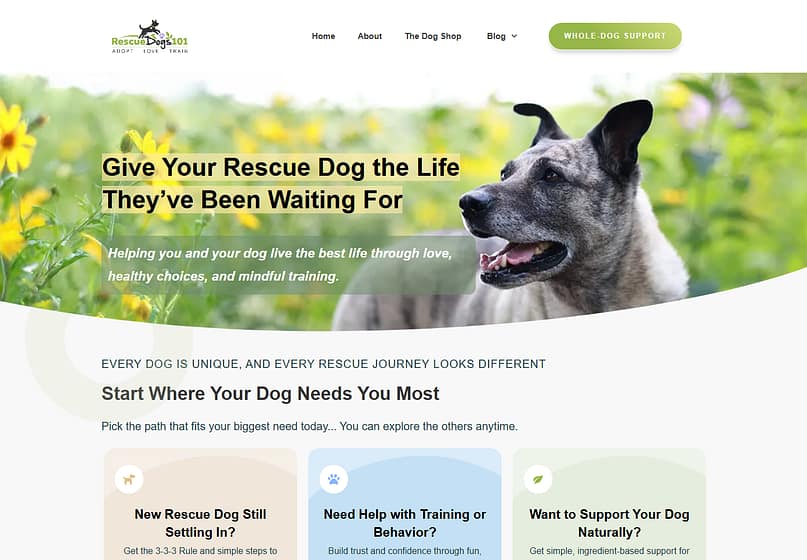
The market answered clearly: the self-paced course at $97 won. The membership version, which seemed promising in theory, didn't gain traction. What I love about this part of her story is how unsentimental she was about it: she let her audience vote with their wallets, took the answer, and kept refining the course based on student results.
What this idea needs from you: real expertise, a topic your audience keeps asking about, and the patience to test formats the way Debi did instead of betting everything on one launch. When you're ready to build, my guides on teaching online, creating a course curriculum, and pricing online courses pick up where Debi's story leaves off.
Want the full journey, whole story included? Read Debi's case study.
2. Video Programs
A video program is a video-first product without the lesson-by-lesson scaffolding of a course: a library of follow-along sessions people practice with again and again. If what you teach is physical or visual, this is the natural format, because your customers don't want to study it, they want to do it alongside you.
You can sell video programs as one-time purchases, bundles, or an ongoing library. Ideas worth stealing:
The proof story comes with the single most expensive lesson on this page, and I'll be honest, it stings a little to read, because they did everything right except one thing. Kit Laughlin and Olivia Allnutt of Stretch Therapy taught in-person stretching workshops all over the world, and before Covid they sold video programs on Vimeo. That's where the lesson lives: the platform owned their business. Vimeo didn't even share customer emails with them, which left a small profit from each sale and no way to market to their own buyers again.
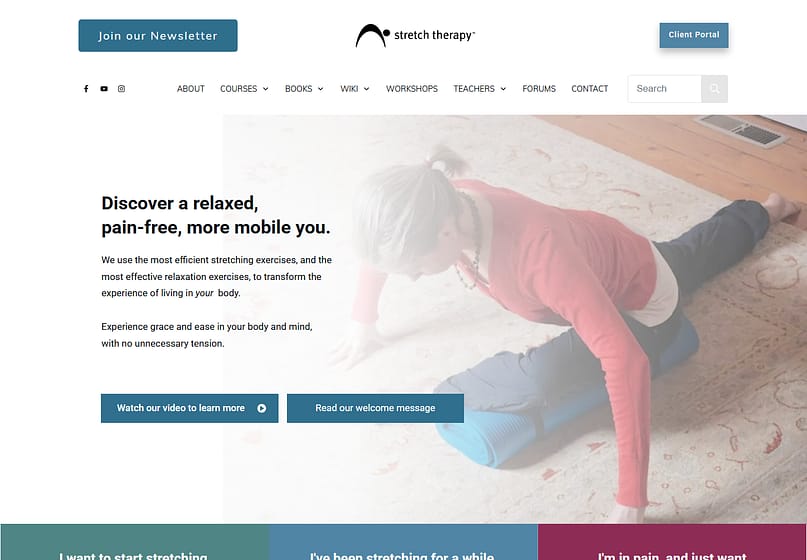
So they rebuilt on their own website, delivering their programs through Thrive Apprentice, and turned YouTube into their discovery engine. Kit calls YouTube the most important marketing tool they've had, with workshop students around the world telling them that's how they were found.
What this idea needs from you: demonstrable skill on camera, and a platform decision made early. Sell your videos somewhere that gives you your customers' emails, because the ability to re-market to your own buyers is the actual business.
The whole platform-ownership story is worth your time: read the Stretch Therapy case study.
3. An Email Newsletter
An email newsletter is a recurring publication delivered straight to subscribers' inboxes, and it earns in one of two ways: directly, through paid subscriptions or sponsorships, or indirectly, as the trust engine that sells everything else you make. For most solo creators, the indirect version comes first.
Formats that work:
Here's what that looks like in practice, and this is the number I quote at people who think they need a huge audience first. Camille Freeman teaches herbalists and nutrition professionals, and her business runs on a weekly newsletter with about 1,500 subscribers, and no dependence on social media or paid ads. That number is the point. Her leads and customers come mainly from that newsletter, readers share it by word of mouth, and she pairs it with a few paid and free workshops through the year.
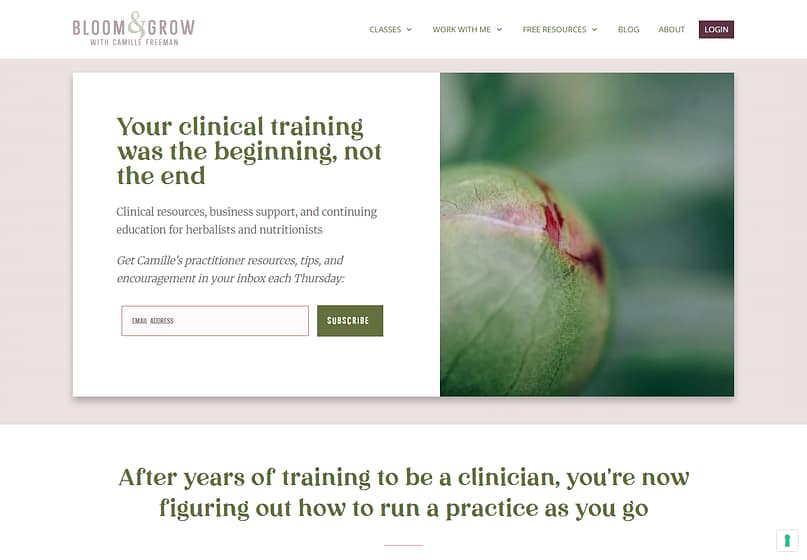
In her words, she's very religious about writing it, and people read it and pass it along.
What this idea needs from you: consistency more than size. Camille's 1,500 engaged readers out-earn most people's 15,000 cold ones. Write it on a schedule, make it genuinely useful, and let it do the selling for your other products. (Stuck on what to send? I keep a whole list of newsletter content ideas.)
See how a small list carries a whole business: read Camille's case study.
4. Guides and Ebooks (Played Smart)
A guide or ebook is your expertise packaged into a single downloadable deep-dive: the definitive answer to one problem your audience keeps hitting. It's the most flexible product here, because the same guide can play three different roles:
One of our customers runs that third, counterintuitive play, and I'll admit it surprised me when I first read his case study. Then it made complete sense. Stephen McCain, a former Olympic gymnast turned health entrepreneur, wrote an in-depth guide to smart fitness and deliberately left it ungated. No email wall. He tells people to download it and read it later, and because the guide is genuinely complete, it does his credibility-building for him, feeding the rest of his business: coaching clients, live events, and affiliate partnerships.
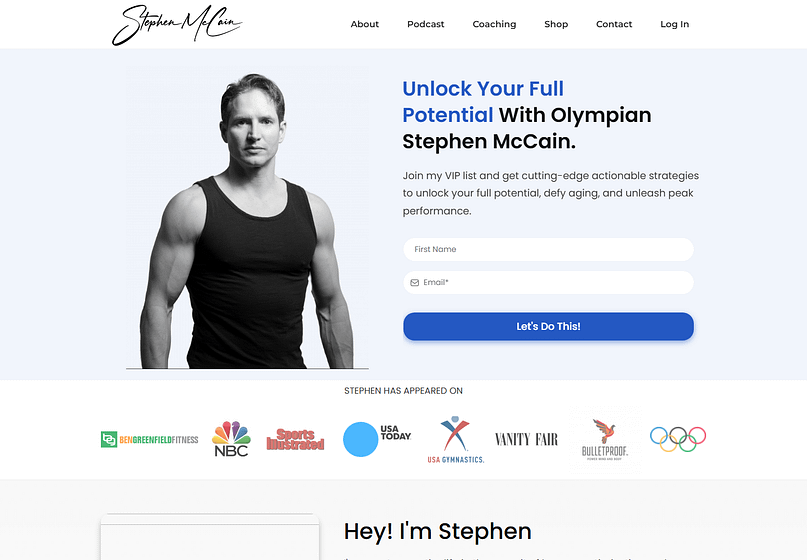
He also doesn't let it sit on his website waiting to be found. He talks about it at webinars, shares it on social, and quotes it in his emails.
What this idea needs from you: a guide good enough that giving it away feels slightly uncomfortable. Lead with value, and let the guide open doors to your paid products. (If you'd rather gate yours the classic way, my lead magnet tools guide covers that route.)
His whole value-first playbook is in Stephen's case study.
5. Printables and Digital Downloads
Printables are single-purpose files people download and use immediately: checklists, planners, worksheets, trackers, swipe files. They sound too small to matter, and that's exactly why they're underrated: they take days rather than months to make, and they give your audience a low-risk first purchase that builds trust before the bigger course or program.
The best printable ideas are hiding in your inbox already. Whatever question your audience asks over and over is a printable waiting to happen:
This is the entry I nudge people toward when they're overthinking their first product. And the proof lives inside a story you've already met: Debi McKee's product line at Rescue Dogs 101 didn't stop at her $97 course. It includes printable resources that help dog owners at every stage, giving her audience entry points at every price level and giving her business more than one thing to sell.
What this idea needs from you: an audience with a recurring practical problem. If your readers keep asking "is there a checklist for this?", there's your first product, and you can have it on sale this week.
See how printables fit into a full product line in Debi's case study.
6. A Membership Program (With Both Sides of the Story)
A membership is recurring access: people pay monthly or yearly for ongoing content, a community, a resource library, or continued support. It's the recurring-revenue dream, which is exactly why I owe you both halves of what our case studies actually show. I really appreciate that our stories caught both outcomes here, because most articles only show you the win.
The half that works: Sue Brown-Moore, a developmental editor for romance writers, runs a membership program as one leg of a diversified business, alongside online courses, one-on-one consultations, live summits, and group programs. The membership works because it sits inside an ecosystem where her audience already buys from her.

The half that doesn't get talked about: Debi McKee tested a membership model for her dog-training content, and it didn't gain traction even though it seemed promising in theory. Her audience preferred to pay once for the self-paced course.
What this idea needs from you: honesty about whether your topic sustains ongoing content, community, or support worth paying for every month. Some audiences want a relationship. Others just want the answer. Test small before you commit, the way Debi did.
Two journeys worth comparing: Sue's case study and Debi's.
7. Group Programs and Mentorship
A group program sits between a course and one-on-one coaching: a structured path toward an outcome, taken with a cohort and with access to you. Because buyers get both a system and attention, group programs command program prices, often several times what a self-paced course charges.
Shapes this takes:
The most interesting version in our case studies uses personalization as its engine, and honestly, it's one of the smartest setups I've seen anyone build with our tools. Jorge de los Reyes Martínez runs educational programs helping people build businesses online. New students take a qualifying quiz that sorts them into one of four profiles, and each profile sees different courses and training.
The profiling ends in a personal interview that matches each student to the right mentorship program. Nobody gets a generic experience, and that personalization is exactly what justifies program pricing.
What this idea needs from you: expertise deep enough to guide people through a transformation, not just a topic. Group programs sell outcomes, so you need a repeatable path to one.
How the profiling system works end to end: read Jorge's case study.
8. Online Coaching
Online coaching is one-on-one help, sold by the session or the package, delivered over video calls. It's the fastest digital product to launch because the product is you: no content to build first, just a booking page and a way to take payment. The trade-off is that it scales exactly as far as your calendar does.
Ways to package it:
Two of our 2024 stories show two different moments of the coaching journey. Stephen McCain runs private coaching on health, from building muscle to weight loss, as part of the same business his free guide feeds. And Valentina Manini, a therapist, is mid-pivot in her case study: moving from one-on-one sessions toward online content and group sessions, because one-to-one hours cap how many people she can help.
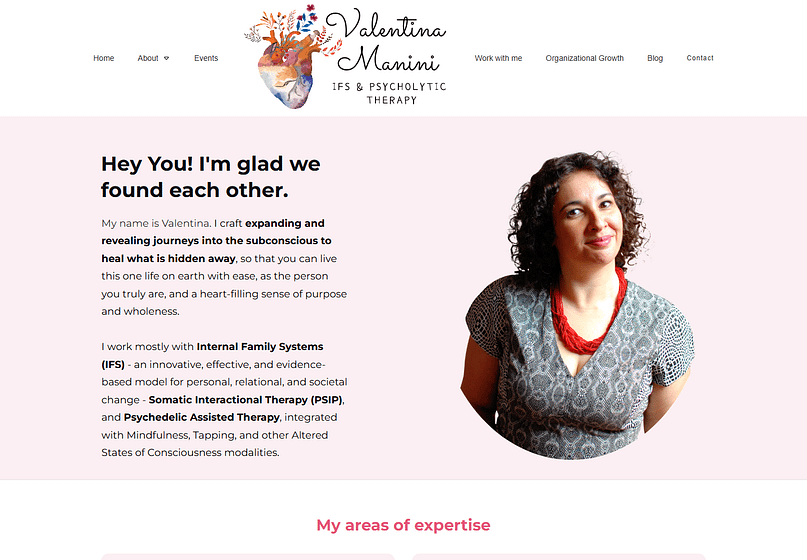
Her honest line about the early years stuck with me: for the first two years, she was actually just trying to figure out what she wanted to do. That's more normal than any success story admits.
What this idea needs from you: almost nothing to start and everything to scale, which is why most coaches eventually build one of the other products on this list on top. When you set up your page, steal from the real coaching landing page examples I've walked through.
For the honest middle of the journey, read Valentina's case study.
9. Quizzes and Interactive Tools
A quiz or interactive tool is a digital product that answers the question every visitor silently asks: "what does this mean for MY situation?" People answer a few questions and get a personalized result. Sometimes the quiz is the product; more often it's the growth engine attached to everything else, generating leads and telling you exactly what your audience worries about.
Versions to consider:
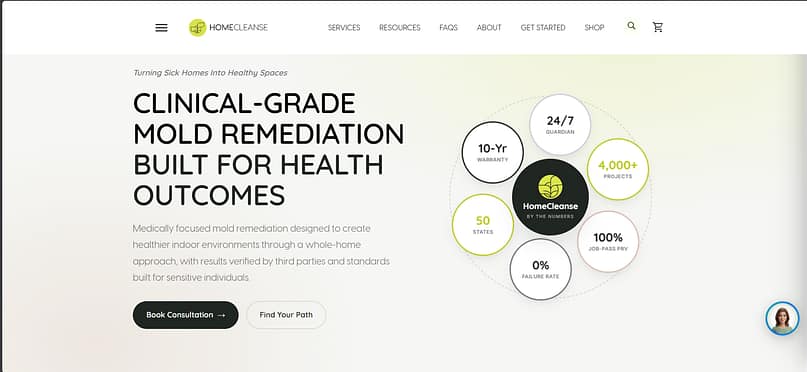
Two of our 2024 stories run quizzes seriously, and the first one is my favorite example of turning a wall-of-text topic into something personal. Scott Broschart at HomeCleanse runs an advanced mold quiz on their founder's site: a series of questions that gets graded, so visitors learn their actual mold risk instead of reading a wall of text about it, while the answers tell his team exactly what potential customers are worried about.
And Jorge's qualifying quiz, from idea #7, is the backbone of his entire personalized program structure.
What this idea needs from you: a topic where the general answer isn't enough. If your audience's real question is personal, a quiz converts that curiosity into engagement and insight nothing else matches. (Thrive Quiz Builder is the tool our customers use for this.)
See a lead-generating quiz in the wild: read the HomeCleanse case study.
10. A Content Platform: Podcast, Livestream, Newsletter
A content platform flips the model: instead of selling one product to your audience, the audience itself becomes the asset. You publish consistently, and the business earns through sponsorships, partnerships, and everything you eventually sell into that audience. It's the biggest swing on this list, and the slowest to pay, which is why the production system matters more than the content.
One of our customers shows how to make it survivable, and his production trick is the part I'd steal even for a much smaller operation. Jordan Wilson runs Everyday AI, a top-performing podcast and online platform that demystifies AI. His trick is the lesson: one daily livestream, repurposed into a podcast episode and a blog post, promoted through a newsletter. One piece of effort, four formats.
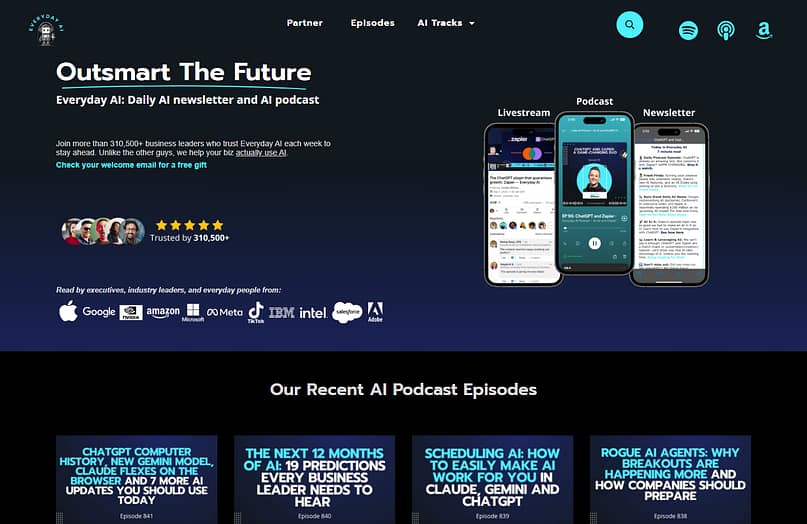
Jordan is blunt in the case study about why: if you don't figure out your production system ahead of time, a content-heavy business will eat you alive.
What this idea needs from you: systems before scale, and the patience to publish consistently before the audience compounds. If that sounds like grind instead of fun, pick a different idea. If it sounds like fun, this one compounds like nothing else here.
The full system is laid out in Jordan's case study.
The Stack Behind Every Story on This Page
Here's something I didn't engineer about this article: every person in it builds their business on the same tools. I chose these case studies because they're recent, but since you've now read the receipts, I can map the tools to the ideas honestly.
- Thrive Apprentice: the course and membership platform. It's how Stretch Therapy delivers every one of their video programs from their own site, after the Vimeo lesson.
- Thrive Architect: the page builder behind these websites. Debi called it a life changer in her case study: "just to be able to design a website the way that you want it to look."
- Thrive Quiz Builder: the tool for quizzes and assessments like the ones you just read about, from lead-gen quizzes to Jorge's profile-sorting system.
- Thrive Suite: all of it together, plus opt-in forms, testimonials, and A/B testing. Sue put it better than I could: "I've loved Thrive Suite for so long. I'm like a super user here."
If you're serious about selling digital products from your own website, on your own terms, with your own customer list, this is the stack built for exactly that. Start with the tool that matches your first product, and grow into the rest.
What Digital Products Sell Best?
The digital products that sell best are the ones attached to an outcome people already want: online courses and group programs (people pay for transformation), coaching (people pay for attention), and well-run newsletters and content platforms (people pay with loyalty, then with purchases). Across our customer stories, the self-paced course under $100 is the most consistent seller, and diversified small ecosystems (a course plus printables plus a newsletter, like Debi's) out-earn single products.
What's the Easiest Digital Product to Make?
Printables and simple guides are the easiest digital products to make: they come straight from knowledge you already have, they need no filming or platform setup, and they can be on sale within days. A checklist or planner also doubles as a test: if your audience won't pay a few dollars for the printable version of your advice, that's useful information before you build the $97 course.
How to Start (Without Betting the Year on a Guess)
If there's one meta-lesson across all ten stories, it's this: the successful creators validated before they built, and treated flops as data.
Debi tested four business models and let her audience pick the winner. Valentina gave herself permission to spend the early years figuring out her direction. Stephen leads with a free guide that proves his value before anyone pays. So start smaller than feels impressive: pick the idea that matches what you know, make the smallest sellable version of it, put it in front of your audience, and let their behavior (not your plan) tell you what to build next.
And when you're ready to build, you already know the stack: it's the one every person in this article used, covered above.
FAQ: Digital Product Ideas
Quick answers to the questions people ask most before picking their first digital product.
What digital products are most profitable?
Online courses and group programs carry the highest margins because you build once and sell repeatedly; Debi McKee's testing found her audience's sweet spot at a $97 self-paced course. Coaching earns well per hour but doesn't scale. Printables earn less per sale but cost almost nothing to make, which keeps margins high at low price points.
Can I sell digital products without an audience?
You can, but every story on this page says build at least a small audience first. Camille Freeman's business runs on 1,500 newsletter subscribers, which is a very reachable number, and Stephen McCain built trust with a free ungated guide before asking anyone to pay. A tiny engaged audience beats a launch into silence.
How much does it cost to start selling digital products?
Very little compared to physical products: no inventory, no shipping. Realistically you need a website, an email tool, and a way to deliver the product (a course platform if it's a course). The bigger investment is time: creating the product and building the audience that will buy it.
Do memberships work as a first digital product?
Usually not first. Debi McKee tested a membership and her audience preferred paying once for a self-paced course, while Sue Brown-Moore's membership works because it sits inside a business with courses, consultations, and events around it. Earn the recurring relationship after you've proven people want the content.
What's the best platform to sell digital products from?
Your own website, on infrastructure you control. Stretch Therapy learned this the hard way selling video courses through Vimeo, which kept their customers' emails; they rebuilt on their own site with Thrive Apprentice. Wherever you sell, make sure you own the customer relationship, because re-marketing to past buyers is where digital product businesses compound.
Pick the Idea That Matches What You Already Know
You don't need the perfect idea. You need the idea that matches your knowledge, your audience, and the amount of time you can honestly give it, and then you need to start smaller than your ambition wants you to. Ten real people on this page did exactly that. Read the case study behind whichever idea fit you best, and take their shortcut instead of their detours.


